
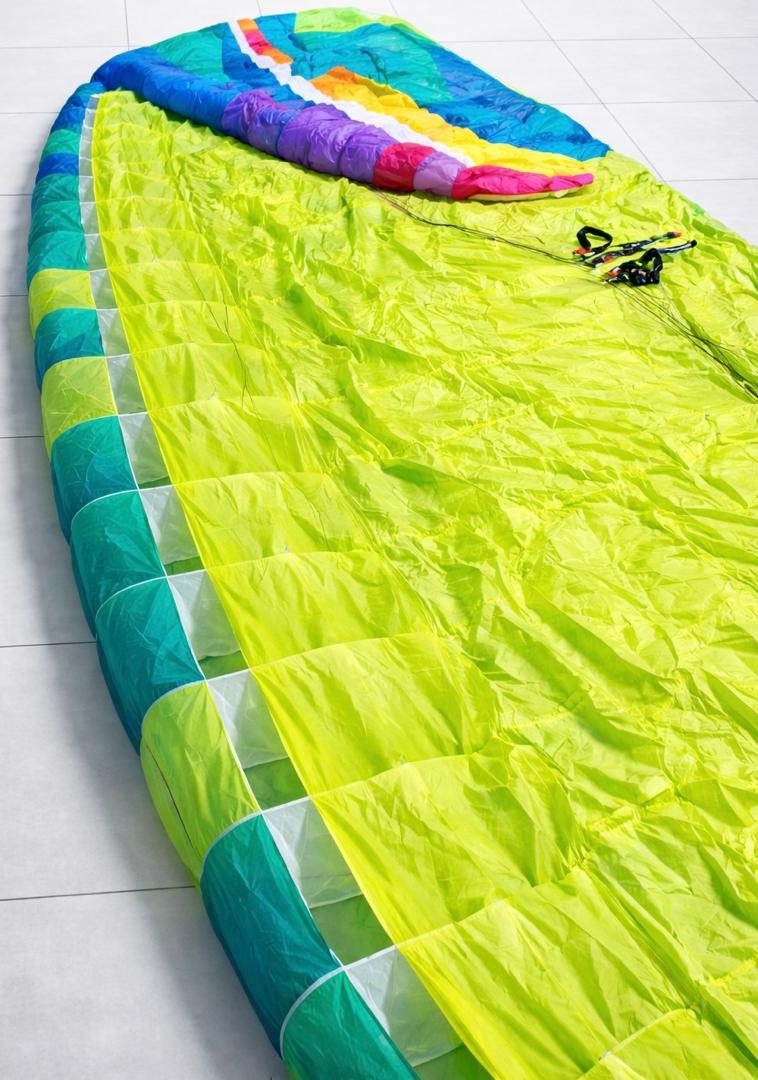
Used BGD Base 3 Paraglider XS 2025
£1,400.00
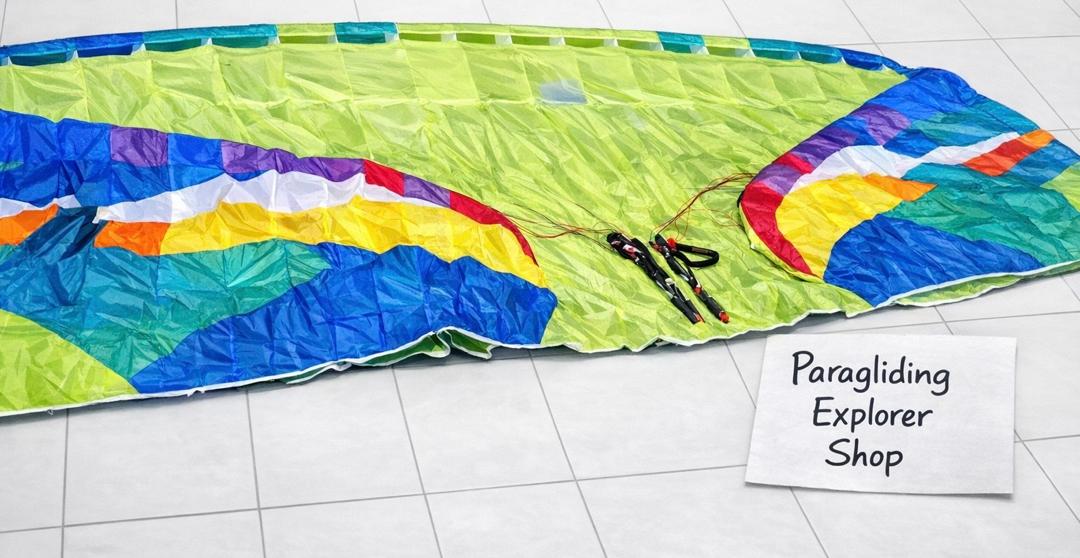
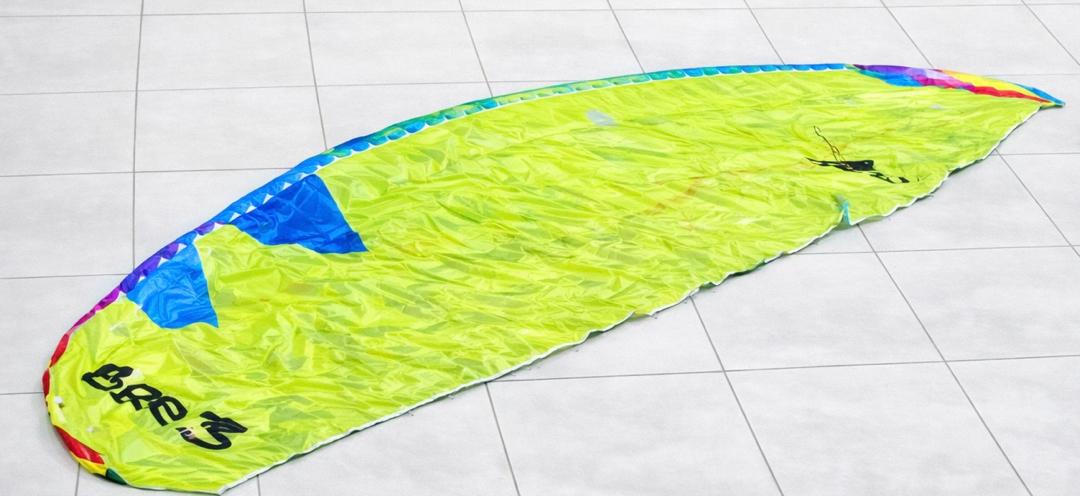
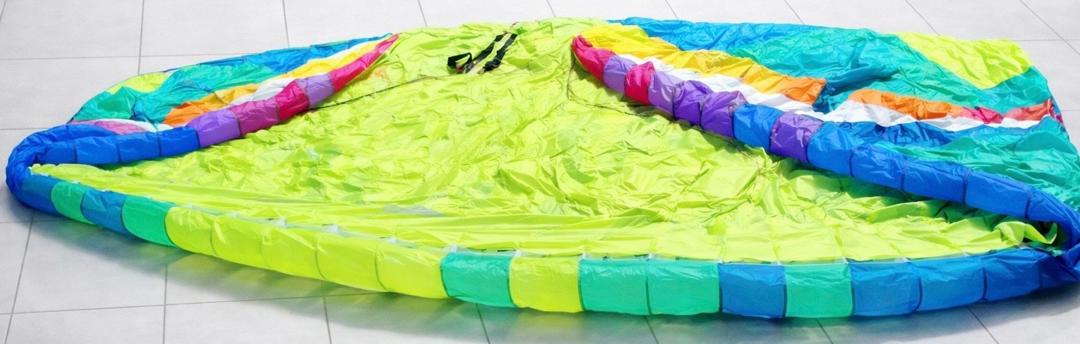
Condition Statement: Excellent, No Damage, No Repairs, 20 Hours of Flight (Like New)
The Used BGD Base 3 Paraglider XS is presented in excellent condition, reflecting responsible ownership, careful handling, and low flight exposure. According to the usage history provided, this wing has accumulated approximately 20 hours of flight time, which places it solidly within the range considered “lightly used” for its class. Moreover, the canopy remains free from damage, repairs, or structural interventions, and it has no patches applied to any section of the sail. Line geometry remains consistent, risers retain clean load pathways, and fabric tension continues to reflect near-new integrity.
Additionally, inflation behavior, brake range feel, and overall canopy presentation suggest that the wing still carries the clarity, crispness, and pitch stability expected from a paraglider with minimal operational wear. Because there are no repairs, no material disruptions, and no history of impact-related distortion, the wing maintains a condition profile comparable to aircraft that are just emerging from break-in periods. While every pilot should verify sizing and suitability, the physical state of this wing supports confidence. In summary, it is a lightly flown, well-preserved, like-new BGD Base 3 XS ready for its next pilot.
Description
Used BGD Base 3 Paraglider XS
A Progression-Focused Wing for Pilots Ready to Advance With Confidence
The Used BGD Base 3 Paraglider XS represents a pivotal step forward for pilots who are ready to refine technique, expand personal limits, and explore the next stage of performance flight with clarity and control. Instead of demanding mastery from the first moment, this wing invites improvement while providing the structure and responsiveness needed for skill development. It delivers progression rather than pressure, and it respects the human learning curve rather than accelerating beyond it.
Moreover, the Base 3 XS delivers a unique combination of authority and accessibility that supports confidence from launch to landing. Rather than overwhelming the pilot with aggressive inputs or unpredictable energy retention, it maintains communication throughout transitions. Every stage of handling encourages flight awareness, technique reinforcement, and gradual expansion into new aerodynamic territories.
Why the XS Size Matters for Real-World Flight Experience
Although many wings deliver performance on paper, the XS sizing format changes the lived experience in meaningful ways. It offers a more manageable wing loading profile for smaller framed pilots, pilots advancing from lower weight ranges, or individuals seeking a wing that positions control at a more natural point of engagement. Furthermore, the XS balance shifts the wing away from brute physicality and toward intentional contact and responsive brake dialogue.
Key XS Advantages
-
Reduced inertia for easier corrections
-
Brake authority that prioritizes clarity over force
-
Better pitch stability during transitional turbulence
-
Faster inflation characteristics on marginal wind days
-
Confidence-building energy expression in turns and climbs
-
Handling that promotes learning without imposing pressure
While some intermediate wings place the burden of precision onto the pilot, the Used BGD Base 3 Paraglider XS shares the responsibility. It invites partnership.
A Wing Built for Skill Growth, Not Stress
Rather than positioning itself as a wing that must be “dominated” to be flown well, the Base 3 XS emphasizes cooperation. As a result, pilots can transition from familiar controlled environments into thermals, ridge lift, and modest cross-country attempts with balanced input rather than reactionary control. Even in varied flying conditions, the paraglider encourages awareness rather than adrenaline.
Additionally, its structural choices—riser architecture, fabric tensioning, and aerodynamic load distribution—support a predictable feel across a wide range of pilot intentions. So, whether the goal is to expand into structured XC development, improve thermalling precision, or build fluency in launch technique, the wing stands as a tool, not a test.
Designed to Support Pilot Progression
-
Smooth launch behavior that rewards timing and stance
-
Brake pressure that communicates without exhausting the pilot
-
Roll response that maintains direction rather than spilling energy
-
Thermalling sensitivity without overwhelming corrections
-
Glide characteristics that encourage decision-making growth
Consequently, flights feel intentional rather than chaotic.

A Human-Centered Approach to Intermediate Flight
Inclusive flight experiences matter in the real world. Not every progressing pilot fits a high-pressure, high-demand performance mold, and not every journey toward XC mastery must be defined by stress. With that reality in mind, the Used BGD Base 3 Paraglider XS is positioned for pilots who want acknowledgment, not intimidation; development, not dismissal.
This Wing Welcomes:
-
Pilots returning from skill gaps and rebuilding confidence
-
Lighter or smaller framed individuals seeking proportional handling
-
Ambitious pilots strengthening fundamentals before full XC commitment
-
Students recently cleared to move beyond school wings
-
Recreational pilots who want structured improvement on their schedule
The objective is not to rush. It is to progress with precision, security, and personal agency.
How the Used BGD Base 3 Paraglider XS Interacts With Real Air, Real Weather, and Real Pilot Progression
The Used BGD Base 3 Paraglider XS introduces a progression-friendly aerodynamic signature that remains recognizable, even during moments of uncertainty. Instead of demanding instinctive perfection from the pilot, the wing offers practical cues that help the pilot interpret air behavior sooner. Through this communication, situational awareness expands naturally. Consequently, real-world skill building occurs in structured increments rather than stressful leaps.
Furthermore, the XS format influences the wing’s presence in thermals, ridge lift, and transition phases. It maintains a supportive balance between authority and humility, allowing pilots to experience glide performance and directional commitment without harsh feedback loops. This results in an aerodynamic identity rooted in cooperation rather than confrontation.
Performance in Thermals
Structured Sensitivity, Not Oversensitivity
Where some intermediate wings impose abrupt roll and pitch transitions during thermal entry, this wing prioritizes control distribution. It communicates energy build-up gradually, providing time to correct, settle, and re-engage. By moderating initial movements, the wing supports the pilot’s interpretation of lift quality rather than forcing reactionary corrections.
Thermal Interaction Highlights
-
Responsive but moderated roll initiation
-
Brake pressure that informs rather than surprises
-
Pitch profile that stays composed during core entry
-
Lift retention that rewards positioning, not panic
-
Turn carving that encourages round geometry, not slippage
Because of this, pilots benefit from improved feedback recognition, which accelerates the learning curve responsibly.
Ridge Lift Behavior
Predictability in Structured Airflow
Ridge conditions often challenge intermediate pilots due to energy contrast between laminar flow and pockets of mechanical turbulence. However, the Used BGD Base 3 Paraglider XS handles these situations with smoother energy restitution. It neither deadens communication nor responds with disproportionate roll. Instead, it manages airflow with intention, supporting predictable momentum pathways and disciplined directional tracking.
Real Ridge Advantages
-
Launch presence that remains reliable in moderate wind
-
Trim glide that discourages unnecessary altitude loss
-
Heading stability across ridge contour changes
-
Brake response that helps maintain line discipline
Pilots refining their ridge foundations will appreciate how this behavior translates into confidence rather than adrenaline-based correction.
Transition and Glide Behavior
When Air Changes, the Wing Guides Rather Than Punishes
Transitions reveal how a wing truly behaves. During glide shifts, lift exits, active control moments, and micro-decisions compound quickly. In these situations, the Base 3 XS supports continuity. Instead of collapsing communicative pressure into silence or amplifying feedback into instability, it moderates the transition experience so pilots may think rather than react.
Glide Stability Benefits
-
Maintains directional intent through variable lift zones
-
Allows micro-brake pressure adjustments without penalty
-
Enables steady decision cycles, even during minor sink phases
-
Retains enough energy to support course correction when needed
These attributes matter for field progression, ridge training days, and initial cross-country confidence investments.
Stability Envelope & Passive Support
Maintaining Safety Without Blunting Skill Development
Even though passive behavior is discreet, it remains inherently present. Stability zones respond with measured authority, which gives the wing space to express performance without removing human agency. Therefore, learning remains intact while unnecessary pressure is kept at a minimum. The pilot grows, rather than merely survives.
Built-In Reassurances
-
Pitch fluctuations remain muted during disruptive air pockets
-
Roll movements stabilize before they escalate
-
Brake travel retains definition throughout deflection ranges
-
Structural load pathways distribute tension evenly
-
Energy expression stays readable rather than erratic
While passive safety characteristics provide reassurance, they do not attempt to replace technique. They exist as a partnership, not a substitute.
Progression-Based Control Mechanics
Precision for Learning Without Overcorrection
Brake communication becomes a primary focus for developing pilots. Because of that, the Used BGD Base 3 Paraglider XS offers progressive authority. Brake pressure builds gradually instead of arriving abruptly. Consequently, pilots can rehearse input depth, range, and modulation without unintentionally oversteering.
Control Interaction Principles
-
Light-to-medium pressure zone for foundational carving
-
Defined midpoint for directional commitment
-
Retained authority for correction and energy alignment
-
Minimal fatigue accumulation across extended flights
By offering these control mechanics, the wing supports conscious piloting over habitual reaction.
Technical Condition Pipeline
How This Wing Was Evaluated Before Listing
Although each used wing carries its own operational history, this specific unit has already undergone structured assessment to define readiness. That evaluation aligns with standard purchase criteria for responsible pilot progression.
Completed Condition Checks
-
Line and riser geometry verification
-
Seam integrity and reinforcement mapping
-
Canopy surface porosity assessment
-
Inflation-pressure feedback confirmation
-
Brake travel measurement and range comparison
This ensures clarity for the pilot before purchase decisions are made.
How the Used BGD Base 3 Paraglider XS Supports Real-World Progress
The Used BGD Base 3 Paraglider XS becomes more than an aerodynamic machine once it enters lived flight environments. It shifts from technical specification to transformational tool as soon as the pilot begins interacting with ridge lift, thermals, or transitional air. Each flight becomes incremental training rather than unpredictable challenge. Because handling cues remain consistent, confidence compounds rather than fractures under pressure.
Moreover, pilots benefit when the wing fits not just their skill level but their learning intention. Instead of forcing pilots to adapt to an aggressive performance identity, the XS configuration adapts toward pilot comprehension. For individuals stepping up from lower classes or returning from a skill gap, this behavior matters.Used BGD Base 3 Paraglider XS
Which Pilot Benefits Most From This Wing?
Profile A: The Post-School Progression Pilot
This individual recently concluded their foundational instruction period and seeks a glider that respects early development boundaries. They need communication, not confrontation.Used BGD Base 3 Paraglider XS
This wing supports that stage by:
-
Offering brake feedback clarity without fatigue
-
Providing pitch stability during ridge and thermal discovery
-
Supporting decision-making time rather than compressing it
-
Encouraging confidence while maintaining realism
Profile B: The Skill-Rebuilding Pilot
A break in flying does not erase skill; it simply softens instinct. This pilot wants to restore trust in themselves and in the wing beneath them. They may need re-familiarization rather than reinvention.
This wing assists their return by:
-
Lowering input demand during micro-corrections
-
Reducing workload during turbulent transitions
-
Preserving margin for gradual re-acclimation
-
Offering technical headroom without punitive feedback
Profile C: The Lightweight / Smaller Frame Pilot
This pilot often finds mid-sized wings physically demanding. Brake authority and roll energy can feel disproportionate.
The XS addresses that by:
-
Matching wing loading to body mass
-
Shaping roll response to proportional input strength
-
Creating a learning path free from force-based handling
Handling Breakdown by Flight Phase
Launch, Climb, Transition, and Landing Behavior
Launch Phase – Predictable Inflation & Cooperative Feedback
The XS inflates with manageable structure rather than abrupt forward surge. Because energy builds progressively, balance can be set before commitment.
Key launch advantages:
-
Wing rises with measured tempo
-
Direction control remains trustworthy
-
Corrections feel proportional rather than reactive
-
Early brake input yields meaningful alignment
Climb Phase – Thermal Integration Without Overcorrection
Thermal entry and centering become skill exercises rather than survival events. The wing communicates without escalating instability.
Climb benefits:
-
Smooth carving for shape retention
-
Sufficient lift conversion for technique development
-
Clear internal feedback for positional mapping
-
Controlled pitch during rising column encounters
Transition Phase – Glide Stability With Decision Time
Transitions emphasize planning, and this wing protects that space. It grants the pilot enough time to adjust, analyze, and commit.
Transition advantages:
-
Stable glide line across variable air
-
Brake authority remains intact without heavy travel
-
Wing loading supports consistent forward momentum
-
Micro adjustments correct trajectory without penalty
Landing Phase – Clarity Without Confusion
Final approach sequences reinforce comfort rather than compressing stress. Landing becomes a practiced dialogue, not a last challenge.
Landing characteristics:
-
Defined flare window
-
Progressive brake engagement
-
Minimal pitch surge after touch-down cues
-
Controlled energy dissipation at conclusion
Early Cross-Country Potential
When the Wing Steps From Training Into Terrain
Although the Used BGD Base 3 Paraglider XS does not pretend to be a high-aggression XC machine, it offers entry-level cross-country potential that grows with the pilot. Each glide, climb, and transition refines pattern recognition as pilots develop terrain reading, thermal mapping, and microroute evaluation.Used BGD Base 3 Paraglider XS
It supports:
-
First XC attempts between known ridges
-
Glide-line extensions beyond training hills
-
Incremental distance increases without intimidation
-
Realistic progression toward structured flights
Because of this, XC exploration becomes sustainable rather than impulsive.Used BGD Base 3 Paraglider XS
Scenario-Based Narratives for Emotional Conversion
What Flight Progression Feels Like Under This Wing
Narrative 1: The First Ridge Commitment
Picture a calm ridge day with moderate lift. The wing rises without force. The canopy steadies. Inputs feel like a conversation rather than an argument. You step off, weight shifts, the wing responds. Your brain stays clear enough to plan your next two decisions instead of clinging to your last reaction. You remain centered because the wing remains committed.
Narrative 2: The First Thermal You Choose, Not Survive
Lift reveals itself gently. The wing indicates the pocket, not with a lunge, but with a nudge. Brake pressure communicates where to lean, how to shape the carve, how to refine altitude gain. Instead of holding on, you participate.
Narrative 3: The First Landing Where You Know You’ve Grown
Final approach stays readable. Control range stays logical. Touchdown feels earned, not escaped. Skill becomes measurable, not theoretical.
These narratives demonstrate progression without illusion or exaggeration.
Technical Breakdown, Geometry Logic, and Comparison Analysis
How the Used BGD Base 3 Paraglider XS Is Built to Perform With Measured Confidence
The Used BGD Base 3 Paraglider XS reflects a design philosophy centered on stability, energy retention, and progressive interaction. Rather than producing abrupt energy spikes or unpredictable oscillations, its structural features promote reliability during pitch, roll, and yaw coordination. While performance remains present, it does not overpower the pilot.BGD Base
Additionally, geometry choices—arc shaping, line layout, riser ergonomics—work together to create a wing that scales skill rather than assumes it. This benefits pilots who require progression rather than premature exposure to high-demand handling.BGD Base
Engineering and Geometry Overview
How Each Design Element Influences Flight Behavior
Leading Edge System
The leading edge uses reinforcement to preserve shape integrity during inflation, glide initiation, and transitional airflow. This provides consistent behavior and avoids collapse-prone deformation during moderate turbulence.
Sail Tension Strategy
Tension is balanced to support energy clarity without deadening feedback. This structure informs pilots of lift quality while preventing aggressive over-communication that forces reactionary braking.
Riser Architecture
Risers are built to keep handling accessible; brake range does not suddenly spike in authority. Consequently, pilots receive a linear dialogue rather than an abrupt threshold.
Brake Range and Travel
Travel distance is calibrated to avoid accidental overcorrection. Because authority increases gradually, learning pilots retain ownership of each adjustment.
Technical Specification Snapshot
(Generalized for XS Categorization)
| Category | Detail |
|---|---|
| Model | BGD Base 3 |
| Size | Extra Small (XS) |
| Pilot Category | Intermediate Progression |
| Structural Focus | Stability, brake clarity, proportional loading |
| Flight Goals | Thermalling, ridge progression, early XC attempts |
| Handling Profile | Communicative, moderated, supportive |
These elements shape how the paraglider behaves during ridge commitment, thermal entry, and glide transitions.
Comparison Chart
How It Compares to Similar Intermediate Progression Wings
This is not a superiority claim; it is a positioning framework to help prospective buyers understand where the wing sits.Used BGD Base 3 Paraglider XS
| Model | Handling Feel | Pitch Stability | Pilot Workload | Skill Growth Curve |
|---|---|---|---|---|
| BGD Base 3 XS (Used) | Supportive & Communicative | High Stability | Low–Moderate | Progressive & Guided |
| Nova Mentor (similar class) | Crisp & Responsive | Moderate | Moderate | Technique-Oriented |
| Advance Epsilon (comparable market) | Relaxed & Friendly | High | Low | Comfort-Centric |
| Gin Atlas (near adjacency) | Smooth & Flexible | Medium–High | Low–Moderate | Accessible Progression |
Resulting conclusion: the Used BGD Base 3 Paraglider XS positions itself between comfort-leaning wings and technique-demanding wings, making it a reliable step into performance without eliminating reassurance.BGD Base
Buyer Objections & Reassurance Framework
Supporting Clarity, Not Pressure
Concern 1: “I’m advancing, but I’m not fully confident yet.”
Reassurance: Control mechanics are intentionally readable and pressure-balanced, meaning the wing supports repetition, refinement, and re-entry into skill cycles.BGD Base
Concern 2: “I am smaller framed and struggle with leverage on mid-sized wings.”
Reassurance: XS sizing reduces physical workload and eliminates force-based steering patterns. Handling aligns with proportional input strength.BGD Base
Concern 3: “I’m interested in XC, but I do not want to overstep.”
Reassurance: Early XC capability exists, but the performance ceiling stays moderate to prevent premature exposure to high-demand flight environments.
Concern 4: “Used wings worry me if I cannot confirm condition.”
Reassurance: This unit has been professionally evaluated, structurally reviewed, and flight-checked. Pre-purchase transparency remains available.Used BGD Base 3 Paraglider XS




Reviews
There are no reviews yet.