
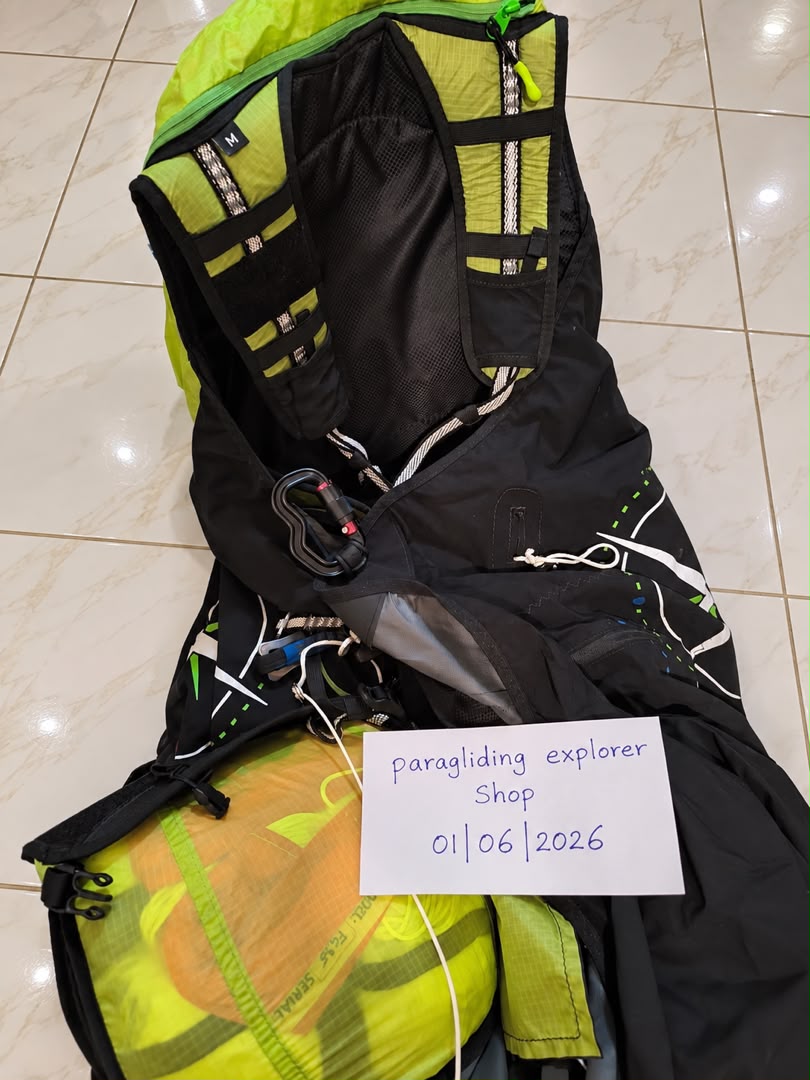
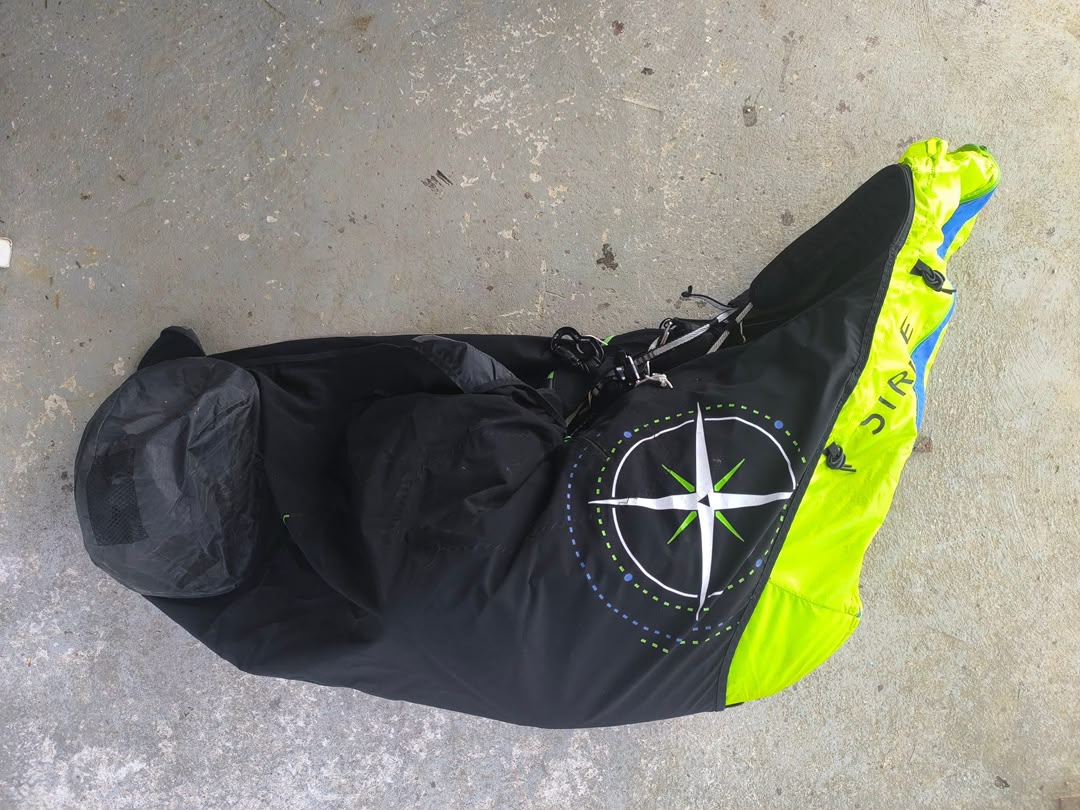
SupAir STRIKE light reserve
£300.00
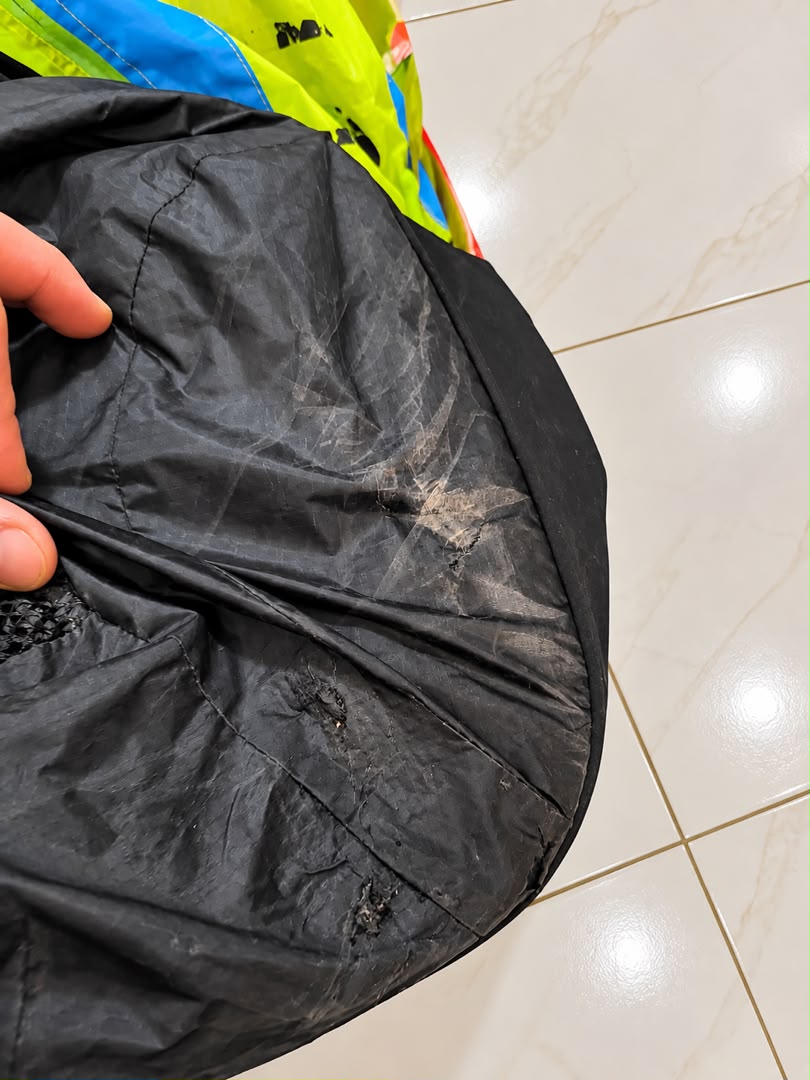
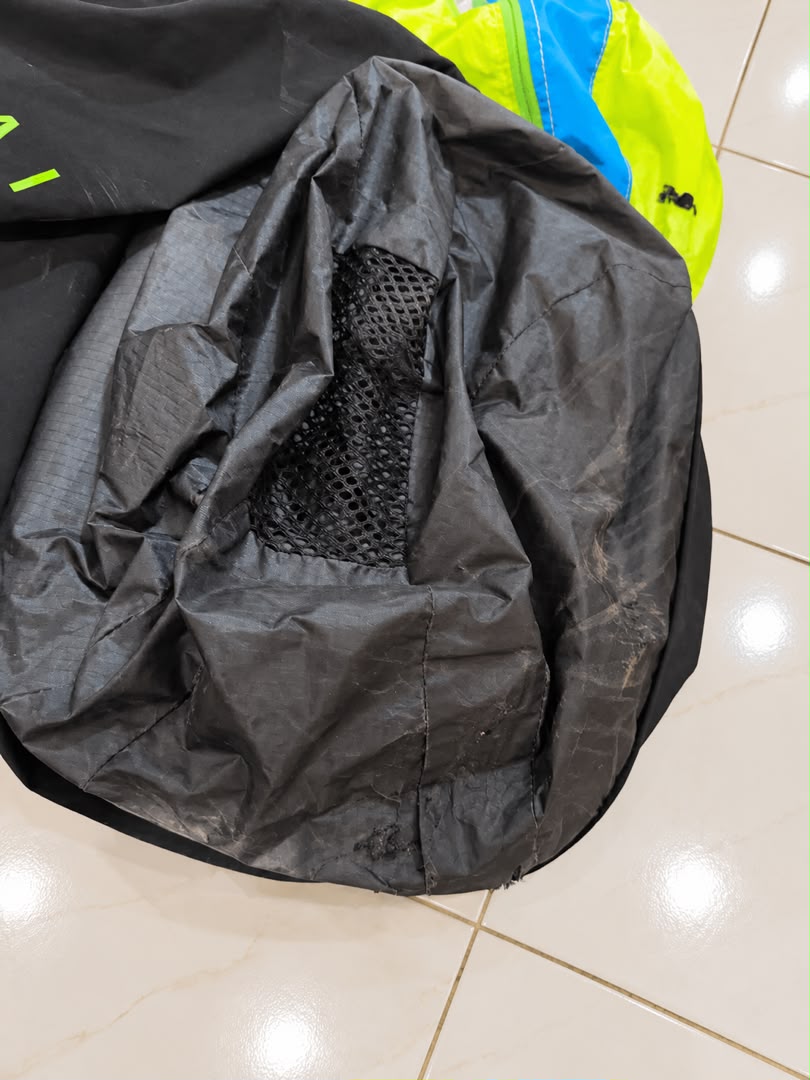
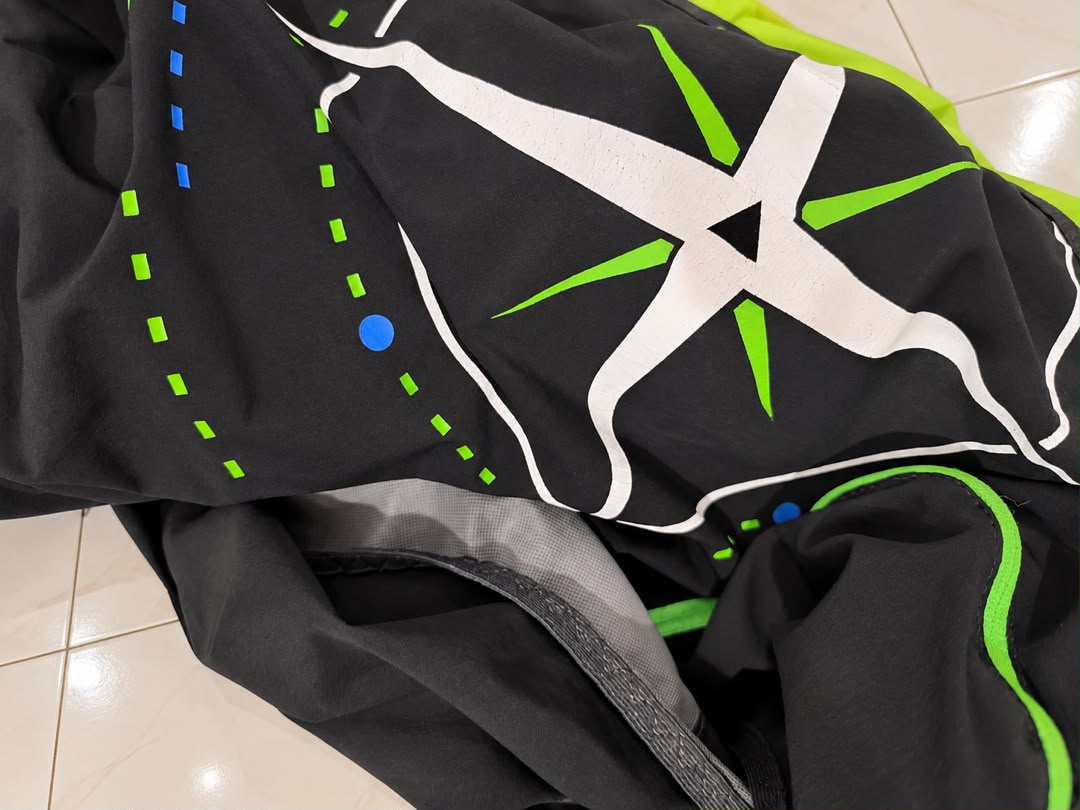
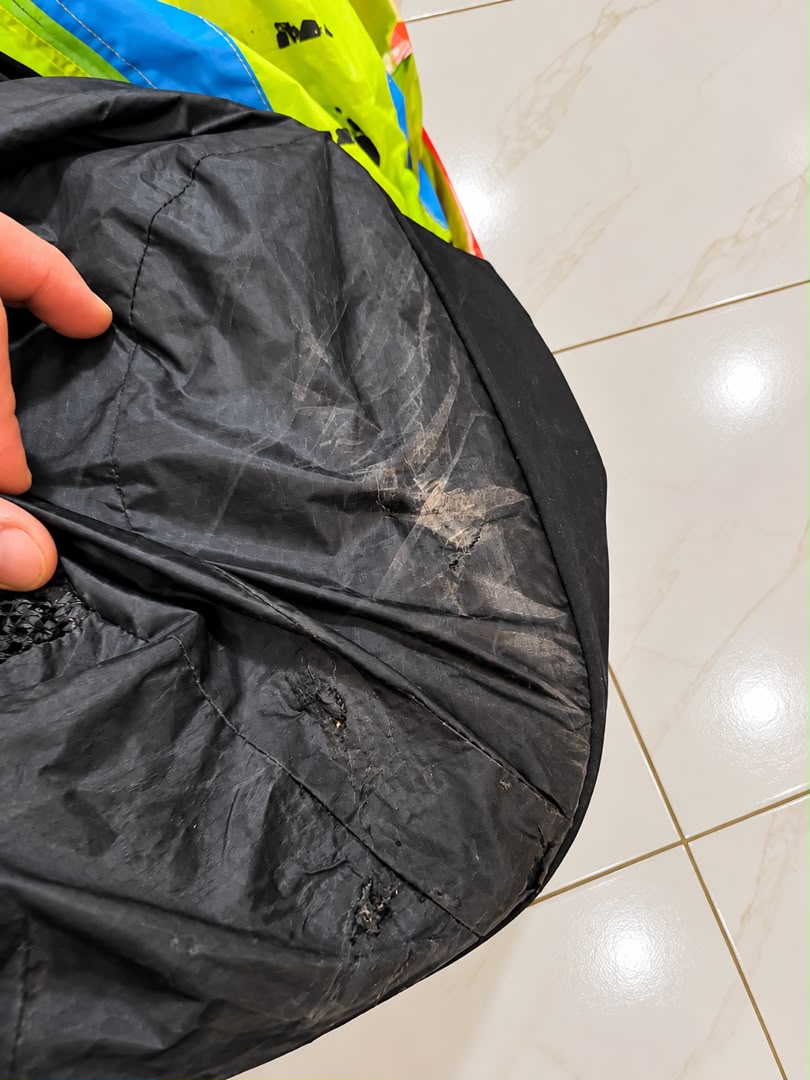
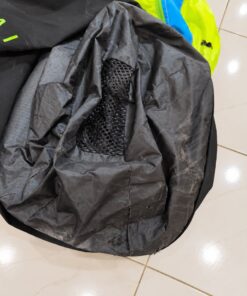
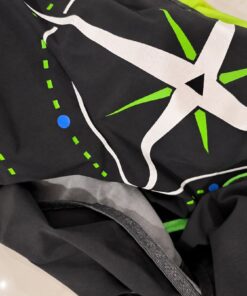
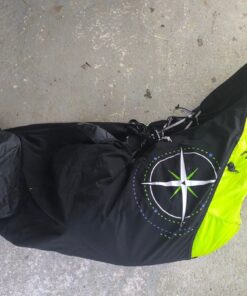
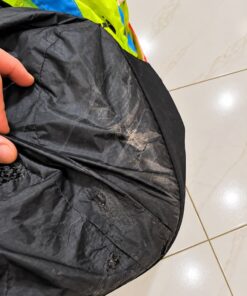
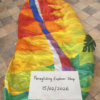
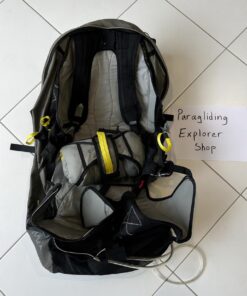
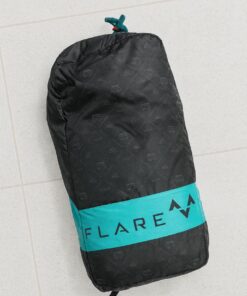
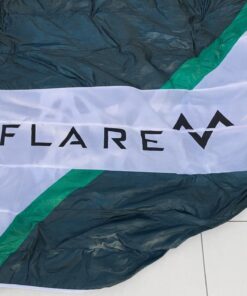
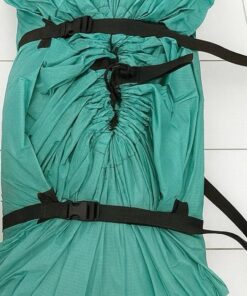
The SupAir STRIKE Light Reserve is in excellent condition and has been carefully inspected by a qualified professional. No tears, holes, damaged stitching, fabric deterioration, or previous repairs have been found. The canopy remains clean, strong, and well maintained, while the suspension lines are in good condition with no visible fraying, cuts, or excessive wear.
All important components have been checked, including the reserve canopy, suspension lines, risers, attachment points, deployment bag, closing system, stitching, reinforcement areas, and connection loops. Everything remains intact and properly presented.
This reserve has been stored and handled with care, and there are no known signs of hard use, water damage, or structural issues. The lightweight construction remains in very good shape, making it suitable for pilots looking for a dependable reserve for a compact paragliding setup.
The complete system has been professionally inspected and is ready to be correctly installed, packed, and used again. As with any reserve parachute, final installation and repacking should be completed or confirmed by a qualified rigger or paragliding professional before flight.
Overall, it is a clean, well-kept reserve with no damage, no repairs, no tears, and all major components included and in excellent condition, ready for use and future jumps.
SupAir STRIKE Light Reserve – Lightweight Emergency Parachute for Compact Paragliding Setups
Lightweight flying equipment is most valuable when reduced bulk is achieved without sacrificing dependable construction, certified performance, and practical compatibility. The SupAir STRIKE light reserve concept brings those priorities together by pairing SUPAIR’s lightweight reserve philosophy with the compact equipment requirements often associated with STRIKE and hike-and-fly harness setups.
Designed for pilots who want to minimize overall pack weight while retaining a properly certified emergency system, the SUPAIR LIGHT reserve was produced around reduced volume, controlled descent, structural stability, and proven materials. Therefore, it can be considered particularly suitable for lightweight paragliding equipment configurations where every kilogram and every liter of packed volume matters.
SUPAIR documents the LIGHT reserve as an EN 12491 and LTF 35/03 certified emergency parachute designed around minimal weight, compact volume, and stable descent behavior.
Lightweight Reserve Design for Serious Pilots
Weight reduction becomes especially important in hike-and-fly, mountain flying, and travel-oriented paragliding.
For this reason, unnecessary matecrafting a product description For Website SEO of 1000 word using the keyphase for “SupAir STRIKE light reserve” with improved ✅ Passivrial mass has been reduced while the structural requirements of a certified reserve parachute have still been maintained.
The SupAir STRIKE light reserve therefore fits naturally into equipment systems where a lightweight harness, compact paraglider, and carefully selected accessories are already being used.
Rather than adding excessive bulk to an otherwise streamlined setup, a more balanced overall equipment package can be created.
Furthermore, three solo sizes were produced so that the reserve can be matched more appropriately to pilot and equipment weight.
Key Features of the SupAir STRIKE Light Reserve
- Lightweight emergency reserve parachute construction
- EN 12491 certification
- LTF 35/03 certification
- Maximum laboratory sink rate of approximately 5.5 m/s
- Available in S, M, and L sizes
- Weight from approximately 1.21 kg
- Porcher Sport PA 6.6 canopy fabric
- 40 g/m² fabric construction
- Cousin Trestec suspension lines
- Computer-controlled panel cutting
- Automated assembly and stitching
- Compact packed design
- Designed for stable emergency descent
- Suitable for lightweight paragliding equipment systems
- Compatible with appropriate certified reserve containers when correct volume and installation requirements are met
SUPAIR lists LIGHT reserve weights of approximately 1,210 g for size S, 1,510 g for M, and 1,850 g for L.
Three Sizes for Different Hook-In Weights
Correct reserve sizing is essential.
The SUPAIR LIGHT was offered in three sizes so that pilots could select an option appropriate for their total suspended weight.
For size S, a minimum hooking weight of 60 kg and maximum of 85 kg are specified.
Meanwhile, size M is listed for approximately 80–105 kg.
For larger setups, size L supports approximately 100–130 kg.
Consequently, the SupAir STRIKE light reserve should never be selected by packed size alone.
Pilot weight, harness, clothing, carried equipment, and other components contributing to the relevant certified weight calculation must all be considered.
Compact Weight Starting at 1.21 kg
Low equipment weight remains one of the strongest reasons for selecting a lightweight reserve.
The smallest SUPAIR LIGHT size weighs approximately 1.21 kg, while the medium version is approximately 1.51 kg and the large version approximately 1.85 kg.
As a result, significant weight savings can be achieved compared with heavier traditional emergency systems.
For pilots hiking long distances before launch, this reduction can be especially noticeable.
Likewise, traveling pilots can benefit when baggage weight must be managed carefully.
Stable Emergency Descent Characteristics
A reserve parachute must be designed around controlled emergency descent rather than ordinary flight characteristics.
SUPAIR specifies a maximum sink rate of 5.5 m/s during laboratory testing for the LIGHT range.
Through careful canopy geometry and load distribution, stability is intended to be maintained after deployment.
This characteristic is particularly important because excessive oscillation during descent can increase landing forces and complicate the final stage of an emergency descent.
Therefore, stability forms a central part of the overall reserve design.
Porcher Sport Lightweight Canopy Fabric
Canopy material has been selected carefully.
SUPAIR specifies Porcher Sport PA 6.6 fabric at approximately 40 g/m² for the LIGHT model.
This material allows the canopy to remain comparatively light while still providing the structural properties required for the certified design.
Because lightweight emergency equipment must tolerate substantial opening forces, material selection cannot simply be based on achieving the lowest possible number on a scale.
Instead, strength, packability, durability, and weight must be balanced.
Cousin Trestec Suspension Lines
Suspension lines are supplied by Cousin Trestec.
These lines were selected for strength and handling characteristics, according to SUPAIR’s documentation.
During deployment, the suspension system transfers load from the pilot and harness toward the reserve canopy.
Therefore, reliable line construction plays a critical role in the entire emergency system.
Additionally, organized and correctly maintained lines can make inspection and professional repacking easier.
Computer-Controlled Manufacturing
Consistency has also been emphasized during manufacturing.
SUPAIR states that reserve canopy panels are cut using computerized CNC equipment, while automated assembly and stitching processes are incorporated into production.
Through this process, dimensional consistency between individual panels can be improved.
Because reserve parachutes depend on carefully controlled canopy geometry, manufacturing accuracy remains particularly important.
Surface Area Matched to Size
Canopy surface area increases with reserve size.
The S version provides approximately 22.5 m², while M increases to around 26.25 m².
For the L model, approximately 28.9 m² is provided.
This progressive sizing allows the canopy area to be better matched to the corresponding certified weight range.
As a result, pilots can select the appropriate configuration rather than relying on one universal canopy size.
Practical Compatibility With Lightweight Harnesses
A compact reserve can be especially useful in lightweight pod harnesses such as those within the SUPAIR STRIKE family.
However, compatibility must always be checked carefully.
For example, the current STRIKE 2 harness uses reserve compartments of approximately 4.5 to 4.75 liters depending on harness size, and SUPAIR specifically recommends verifying reserve compatibility before installation.
Therefore, the SupAir STRIKE light reserve should not simply be assumed to fit every harness.
Packed volume, container dimensions, reserve size, folding technique, and deployment-handle configuration must all be verified.
Professional Installation Is Essential
Reserve installation should be completed according to the harness and reserve manufacturer instructions.
SUPAIR recommends that initial reserve installation and assembly be performed by a qualified professional.
The reserve must fit correctly inside the compartment without being excessively compressed or allowed to move freely.
Likewise, deployment-handle connection and riser routing must remain consistent with the approved system.
For these reasons, professional inspection is strongly recommended whenever a reserve is installed, transferred between harnesses, or repacked.
Proper Weight Selection Matters
Pilot weight limitations must be respected.
SUPAIR’s reserve documentation states that pilots should remain within the manufacturer’s specified loading limits and warns against using a reserve above or below its approved range.
This makes accurate sizing especially important when a lightweight setup is being built.
Choosing the smallest possible reserve purely to reduce weight or packed volume is not appropriate if the total flying weight exceeds the certified limit.
Designed for Lightweight Adventures
For hike-and-fly pilots, lightweight equipment can dramatically improve comfort during the ascent.
A smaller overall pack can be carried more easily.
Less weight can be transported over steep terrain.
Travel can become simpler.
Furthermore, compact equipment can make organization inside a lightweight harness more efficient.
The SupAir STRIKE light reserve therefore appeals most strongly to pilots who want a carefully balanced emergency system rather than unnecessary bulk.
Why Choose the SupAir STRIKE Light Reserve?
The SupAir STRIKE light reserve combines lightweight construction, certified emergency performance, proven materials, and compact packing characteristics in a format well suited to weight-conscious paragliding setups.
Three sizes allow the reserve to be matched more accurately to different total weights.
Meanwhile, Porcher Sport fabric and Cousin Trestec suspension lines are used to balance strength and mass.
Computer-controlled cutting and automated stitching support manufacturing consistency, while the certified canopy design is focused on stability and controlled descent.
For pilots building a compact STRIKE-style, hike-and-fly, travel, or lightweight paragliding system, the SupAir STRIKE light reserve provides a practical combination of low weight, manageable volume, certified performance, and dependable SUPAIR engineering.
Above all, correct sizing, professional installation, and regular inspection remain essential. When properly matched to the pilot and harness, this lightweight reserve can become an important part of a carefully planned paragliding safety system.
SupAir STRIKE Light Reserve – Practical Compatibility, Packability, Hike-and-Fly Use, and Reserve System Integration
The SupAir STRIKE light reserve is best understood as part of a complete lightweight paragliding system rather than as an isolated component. For pilots using compact harnesses, hike-and-fly equipment, bivouac setups, or travel-focused gear, reserve compatibility, packed volume, installation quality, and overall system weight must all be considered together.
Within the SUPAIR ecosystem, the STRIKE harness family has been developed around lightweight performance. At the same time, compatible reserve parachutes such as SUPAIR’s lightweight rescue models are intended to help pilots keep total equipment mass under control without ignoring certification, structural integrity, or practical deployment requirements.
Because reserve fit can change according to harness size, parachute size, folding method, and container geometry, careful matching remains essential. SUPAIR specifically states that reserve volume can vary depending on how the parachute has been packed and recommends professional initial installation.
Designed for Weight-Conscious Paragliding Systems
Every component becomes significant when equipment must be carried uphill before takeoff.
For this reason, a lightweight reserve can be especially valuable within a hike-and-fly configuration.
The SupAir STRIKE light reserve concept supports riders—more accurately, pilots—who want to reduce unnecessary carried mass while maintaining a complete emergency setup.
When a lightweight wing, harness, helmet, reserve, and compact accessories are selected together, the total equipment package can become considerably easier to transport.
As a result, longer approaches can feel more manageable, while travel and bivouac organization can also become simpler.
Practical Match for the STRIKE Harness Family
The original SUPAIR STRIKE was designed with a dedicated front reserve container.
Its manual specifies a maximum reserve pocket volume of approximately 4.5 liters, with compatibility stated for SUPAIR Xtralite reserves and other lightweight rescue models of appropriate dimensions.
Meanwhile, the newer STRIKE 2 uses an integrated reserve compartment with a volume of approximately 4.5 to 4.75 liters, depending on configuration.
SUPAIR has tested this compartment with several of its reserve systems, although the company also notes that additional models from other manufacturers may fit even if they have not been specifically tested.
Therefore, the SupAir STRIKE light reserve should always be evaluated as part of the exact harness and reserve combination being used.
Compact Packed Volume Matters
Low reserve weight alone does not guarantee compatibility.
Packed volume can be equally important.
If a reserve is too large for the compartment, excessive compression may make deployment more difficult.
Conversely, if the packed reserve is substantially smaller than the compartment, movement inside the container may occur.
For this reason, both reserve size and packing method must be considered.
Moreover, SUPAIR notes that the same reserve model can occupy a slightly different volume depending on how it has been folded.
This is one reason professional repacking remains strongly recommended.
Practical Advantages of the SupAir STRIKE Light Reserve Setup
- Reduced overall pack weight for hike-and-fly use
- Compact reserve volume for lightweight harness systems
- Easier organization inside travel-oriented equipment
- Suitable for mountain and bivouac flying setups
- Compatible with appropriately sized reserve compartments
- Designed around certified emergency parachute performance
- Multiple reserve sizes for different pilot weight ranges
- Useful for minimizing unnecessary equipment bulk
- Professional inspection and installation can be performed easily
- Supports a balanced lightweight paragliding package
- Suitable for pilots prioritizing packability and efficiency
- Can complement lightweight STRIKE-series harness configurations
Hike-and-Fly Performance Benefits
During hike-and-fly use, the majority of equipment is carried before it is flown.
Therefore, every reduction in unnecessary mass can improve comfort during the ascent.
A lighter reserve contributes directly to reduced backpack weight.
That difference may become particularly noticeable during steep climbs, long mountain approaches, or repeated training days.
Furthermore, smaller packed dimensions can leave additional space for water, clothing, instruments, and other essential equipment.
For pilots who regularly hike before flying, the SupAir STRIKE light reserve therefore provides value well beyond its emergency role.
Ideal for Travel-Oriented Pilots
Airline baggage limits can make lightweight paragliding equipment especially attractive.
A conventional harness, large reserve, full-size wing, helmet, and accessories can quickly create a heavy travel bag.
By contrast, a lighter rescue system helps reduce total baggage weight.
Moreover, compact packing can simplify transport inside smaller rucksacks.
Consequently, pilots who frequently travel internationally or move between flying sites may appreciate the reduced bulk associated with lightweight equipment.
Bivouac Flying Applications
Bivouac flying places particularly demanding requirements on equipment selection.
In addition to normal flying gear, pilots may need to carry food, water, navigation equipment, clothing, sleeping systems, and other essentials.
Therefore, minimizing the weight of the flying system itself can create more capacity for necessary expedition equipment.
The STRIKE 2 is specifically positioned by SUPAIR as a lightweight hike-and-fly competition harness, and the manufacturer also highlights its suitability for flight-bivouac applications.
Within this type of setup, a compact reserve becomes an important contributor to overall efficiency.
Reserve Installation Must Remain Uncompromised
Although low weight is desirable, installation quality should never be sacrificed.
The reserve must remain positioned correctly inside the compartment.
Its deployment handle must be connected in accordance with the harness instructions.
Likewise, the risers must be routed correctly.
For STRIKE 2 installations, SUPAIR instructs that the reserve handle bridle be attached to the side loop of the deployment bag using a lark’s-head connection and that the connection be tightened securely.
These details demonstrate why compatibility involves much more than simply fitting the packed reserve into the harness pocket.
Professional Initial Installation
SUPAIR strongly recommends that the initial reserve assembly and installation be completed by a qualified professional.
This recommendation is especially important for lightweight harnesses because their reserve compartments can be compact and precisely shaped.
A professional can verify container volume, handle connection, riser routing, closing sequence, and extraction resistance.
Furthermore, compatibility can be checked through a deployment test before the harness is flown.
This helps ensure that the reserve can be removed cleanly from the container when required.
Regular Repacking and Inspection
Reserve systems should not simply be installed and forgotten.
Fabric condition should be monitored.
Lines should be checked for damage or contamination.
Connectors and risers should also be inspected.
Moreover, repacking intervals specified by the manufacturer or national flying organization should be followed.
Regular repacking helps prevent excessive compression from remaining unchanged for long periods.
It also gives the pilot or qualified packer an opportunity to inspect the canopy thoroughly.
Appropriate Reserve Loading
Correct loading remains one of the most important considerations.
The reserve must be selected according to the applicable certified total weight range.
Pilot body weight alone is not always sufficient for this calculation.
Harness weight, clothing, instruments, carried equipment, and other relevant components can all contribute to total suspended mass.
Therefore, the lightest available reserve should not automatically be chosen.
Instead, the correct size should be selected according to both certification limits and practical system compatibility.
Lightweight Does Not Mean Disposable
Lightweight paragliding equipment is often engineered with carefully selected materials and optimized construction.
However, reduced mass means that handling and storage practices can become even more important.
The reserve should be kept dry.
Prolonged exposure to moisture should be avoided
Contact with chemicals, oils, sharp equipment, or excessive heat should also be prevented.
When the equipment has been exposed to unusual conditions, professional inspection should be considered.
By treating the SupAir STRIKE light reserve carefully, material condition can be preserved more effectively over time.
Suitable for Experienced Lightweight Pilots
SUPAIR positions the STRIKE 2 itself as a specialist lightweight harness intended for experienced pilots rather than as a first pod harness.SupAir STRIKE light reserve
That context is important when building a complete lightweight system.
Reduced-weight equipment is often chosen by pilots who already understand harness setup, reserve management, wing handling, and equipment inspection.SupAir STRIKE light reserve
For experienced hike-and-fly users, a compact reserve can fit naturally into this philosophy.
Maintaining a Balanced Equipment System
A good lightweight setup should remain balanced.
Removing weight from one component only to create compatibility problems elsewhere defeats the purpose.
Therefore, wing size, harness size, reserve volume, reserve weight, connectors, protection system, and carrying equipment should all be considered as one package.SupAir STRIKE light reserve
The SupAir STRIKE light reserve can support this approach by reducing unnecessary emergency-system bulk while retaining appropriate certified reserve functionality.SupAir STRIKE light reserve
Why the SupAir STRIKE Light Reserve Works for Modern Hike-and-Fly
Modern paragliding equipment is increasingly being designed around efficiency.
Wings can be packed smaller.SupAir STRIKE light reserve
Harnesses can be made lighter.
Protection systems can be reduced or reconfigured.
Likewise, reserve parachutes can be optimized for lower weight and smaller packed volume.
The SupAir STRIKE light reserve fits directly into this trend.
For hike-and-fly pilots, travel-focused flyers, bivouac enthusiasts, and weight-conscious users, a correctly selected lightweight reserve can make the overall system easier to carry and organize.
At the same time, certification, correct sizing, professional installation, and regular inspection remain essential.
When those requirements are respected, the SupAir STRIKE light reserve can provide an effective balance between low weight, compact storage, dependable emergency functionality, and practical compatibility with lightweight paragliding equipment.SupAir STRIKE light reserve
Be the first to review “SupAir STRIKE light reserve”
Related products
Used Gliders

Used Gliders
Used Gliders
Used Gliders
Used Gliders
Used Gliders
Used Gliders
Used Gliders
Reviews
There are no reviews yet.