
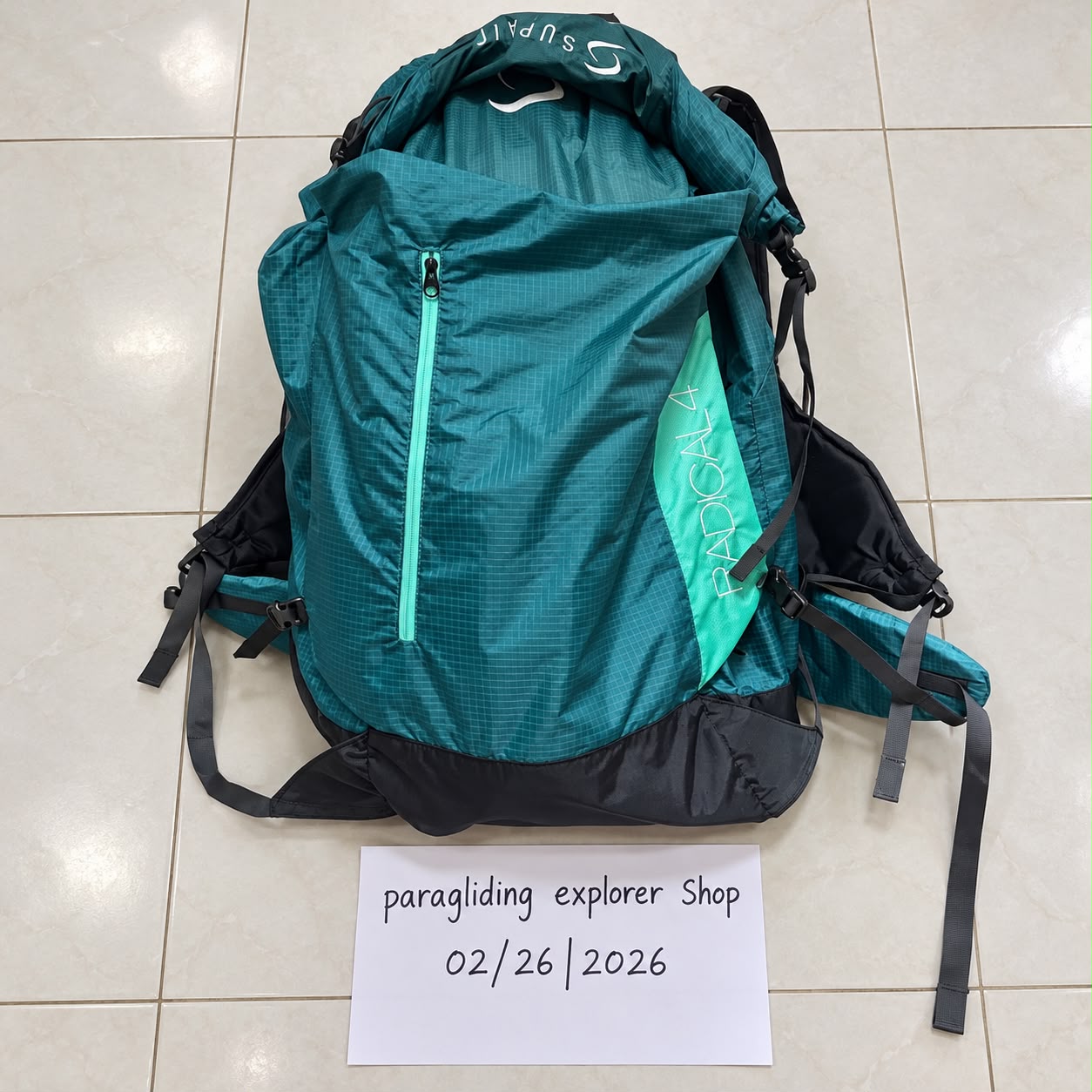
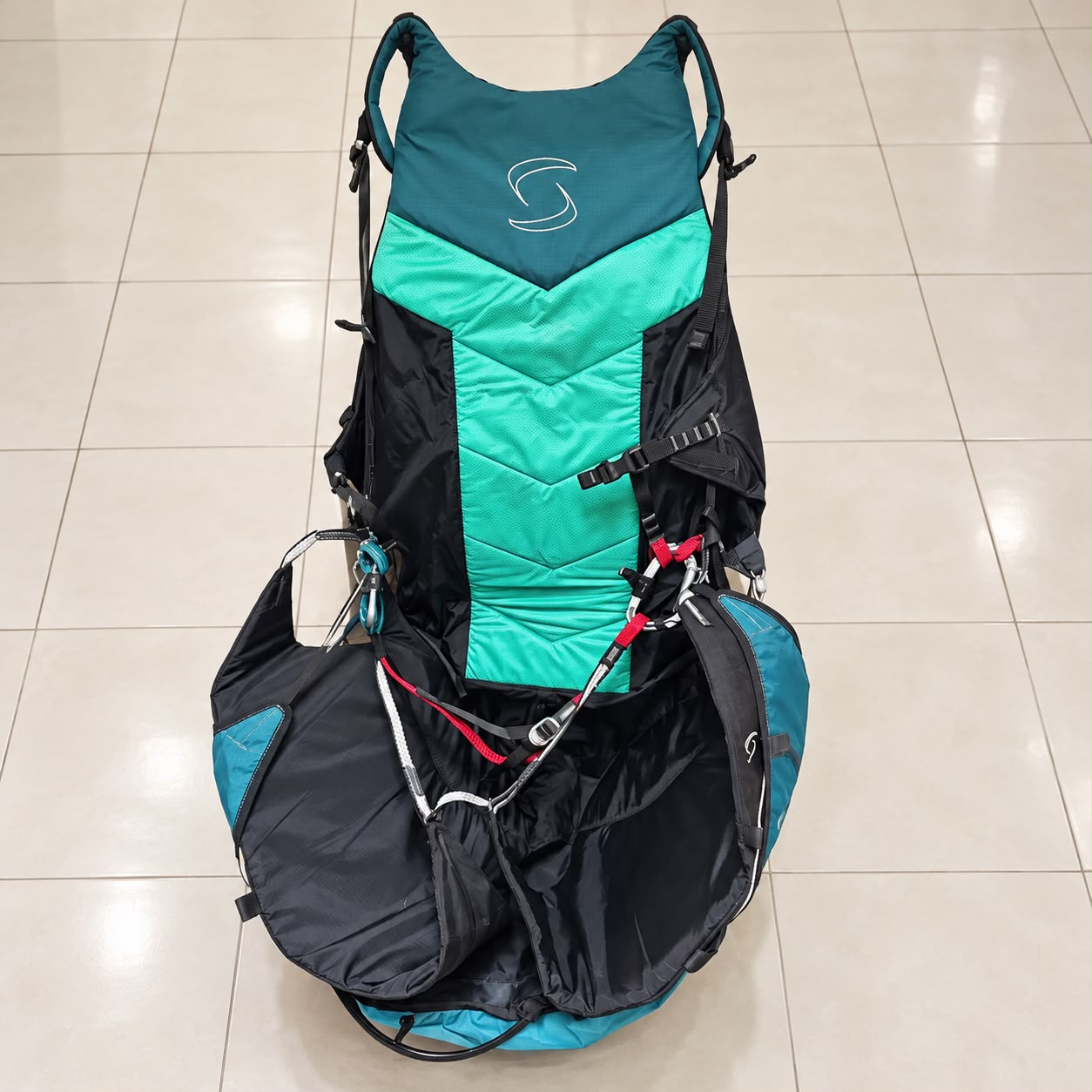
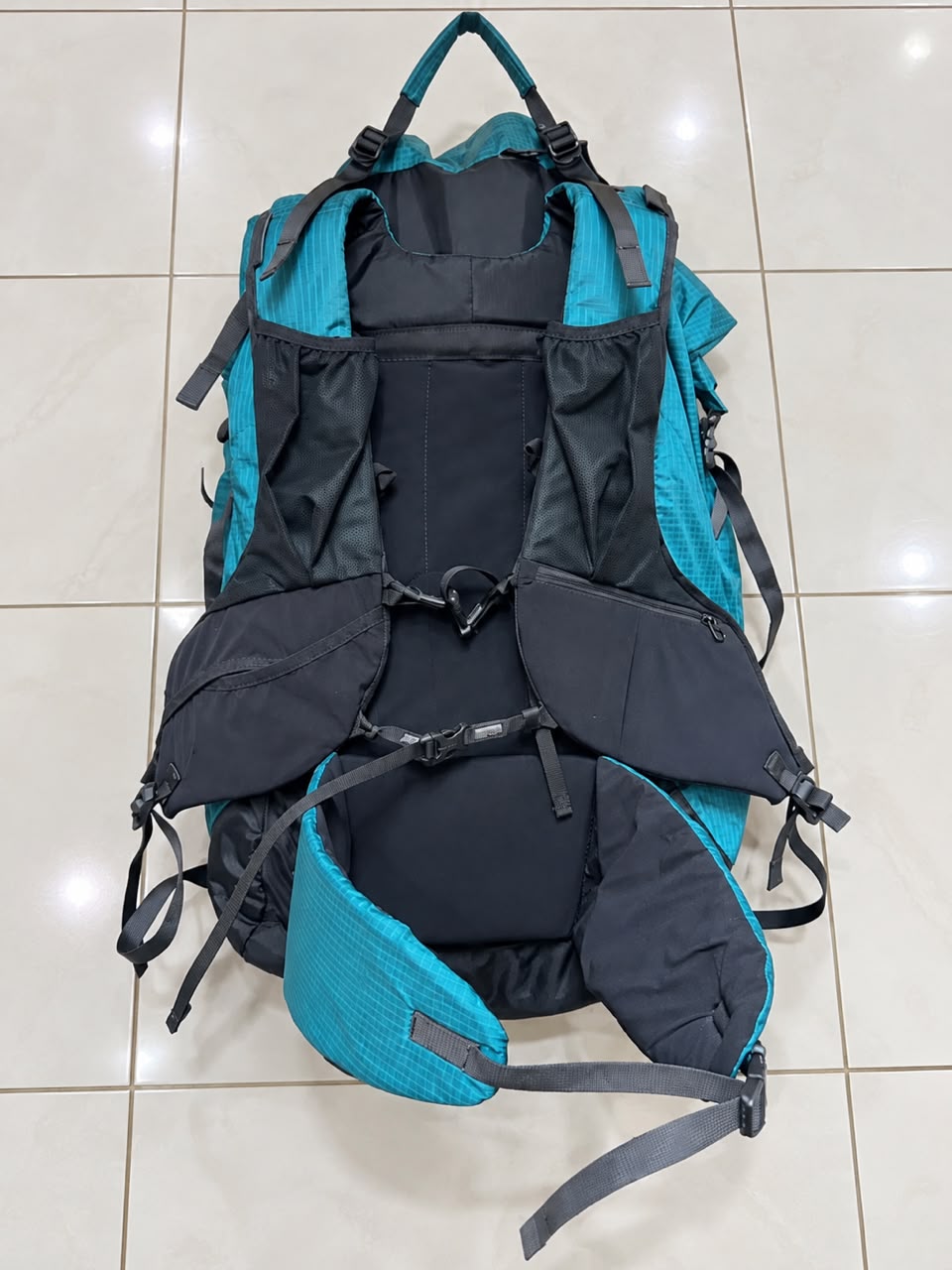

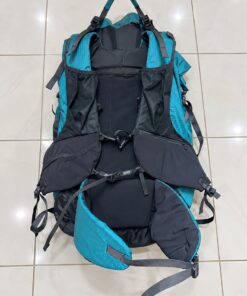
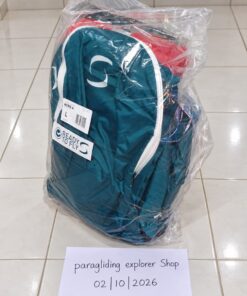
Supair Radical 4 M paragliding harness

£500.00
The Supair Radical 4 M paragliding harness is offered in excellent condition and has been professionally inspected to confirm its overall quality, condition, and readiness for use. It has been carefully checked and found to have no damage, no repairs, no tears, no significant wear, and no structural defects. The harness has been well maintained and is ready for many more flights and jumps.
Every component has been carefully inspected, including the harness body, seat, webbing, stitching, buckles, leg straps, chest strap, carabiners, adjustment straps, connection points, protection system, reserve compartment, reserve handle, storage compartments, and related hardware.
Included components:
- Supair Radical 4 M harness
- Seat and harness structure
- Leg straps
- Chest strap
- Adjustment straps
- Carabiners
- Protection system
- Reserve compartment and handle
- Storage compartments
- Connection points
- Related hardware
- Protective/storage bag, if included
No tears, repairs, cracks, or significant damage have been found. The harness remains clean, secure, and well maintained.
The Supair Radical 4 M is ready to use and ready for many more flights and jumps again. It is an excellent choice for recreational flying, thermal soaring, cross-country flying, and pilot progression. A complete professional pre-flight inspection should always be performed before returning safety-critical equipment to use.
Supair Radical 4 M Paragliding Harness
The Supair Radical 4 M paragliding harness has been designed for pilots seeking a practical combination of comfort, protection, lightweight handling, and reliable flight control. A modern harness configuration is provided so that efficient flying can be supported across recreational, cross-country, and progression-oriented sessions.
With its ergonomic design, the harness can be positioned comfortably around the pilot while useful adjustment options are provided for achieving a secure and personalized fit. Consequently, extended flights can be enjoyed with greater comfort and reduced distraction.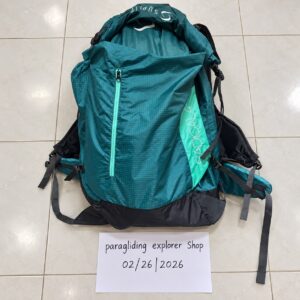
Furthermore, the Radical 4 platform is intended to provide a practical connection between the pilot and paraglider. As a result, body movements can be transferred naturally during weight shifting, turning, thermalling, and active flying
Ergonomic Medium-Size Configuration
The Radical 4 M has been configured in a medium size, making it suitable for pilots whose measurements correspond with the manufacturer’s sizing requirements.
A correctly fitted harness is essential because comfort, control, and safety are all influenced by the fit. Consequently, the harness should be adjusted carefully before flight.
Key Product Highlights
- Supair Radical 4 M Paragliding Harness
- Medium-size configuration
- Ergonomic pilot seating
- Lightweight-oriented design
- Adjustable fit
- Comfortable flying position
- Efficient weight-shift control
- Practical protection system
- Storage compartments
- Leg and chest adjustment system
- Suitable for recreational flying
- Cross-country applications
- Thermal flying
- Pilot progression
- Suitable for compatible Supair equipment
Comfortable Flying Position
Comfort is particularly important during longer paragliding flights.
As the pilot settles into the harness, the seating position can be adjusted to provide appropriate support. Consequently, fatigue can be reduced during extended periods in the air.
Furthermore, a comfortable harness allows attention to remain focused on the paraglider, weather conditions, and flight path.
Weight-Shift Control
Weight shifting is an important part of paraglider control.
As pressure is transferred from one side of the harness to the other, the glider can respond through coordinated pilot input.
Consequently, turns and directional adjustments can be performed more naturally.
The harness should therefore be adjusted so that the pilot remains securely positioned while retaining sufficient freedom of movement.
Ergonomic Support
The harness is designed around the pilot’s seated flying position.
As the pilot’s body position changes during different stages of flight, appropriate support can be maintained.
Consequently, the harness can remain comfortable during cruising, thermalling, transitions, and active piloting.
Protection
Protection is an important consideration when selecting a paragliding harness.
The Radical 4 configuration is designed to provide an integrated protection solution appropriate to its intended use.
Consequently, the pilot can benefit from an additional protective layer during suitable operating situations.
Protection systems should always be inspected before flight, and their condition should never be assumed based solely on appearance.
Ground Handling
A practical harness can also make ground preparation more manageable.
As the pilot prepares for launch, the harness can be adjusted and connected before the glider is inflated.
Consequently, a consistent pre-flight routine can be established.
All buckles, straps, carabiners, and connection points should be checked carefully before takeoff.
Launch Preparation
Correct preparation should always be performed before launching.
The harness should be adjusted according to the pilot’s body shape and clothing.
Consequently, unnecessary movement or discomfort can be minimized after takeoff.
The pilot should also verify that all required connections have been correctly secured.
Takeoff
During takeoff, the pilot must remain connected securely to the glider.
As the wing inflates and the pilot begins running or moving into the air, the harness provides the primary seating and attachment interface.
Consequently, proper adjustment is essential.
The pilot should never rely on the harness alone as a substitute for a complete pre-flight inspection.
In-Flight Comfort
Once airborne, the harness can provide support beneath the pilot.
As the pilot settles into the seated position, the harness can distribute body pressure across the appropriate areas.
Consequently, comfort can be maintained during longer flights.
Adjustments should be made gradually because excessive changes can alter the pilot’s position and control response.
Thermalling
Thermalling requires continuous weight shifting and precise glider control.
As the pilot circles within rising air, the harness allows body movements to be transferred into the glider.
Consequently, turning inputs can be made smoothly.
A comfortable seating position can also help reduce fatigue during extended thermal flights.
Cross-Country Flying
Cross-country flying often requires pilots to remain airborne for extended periods.
Therefore, harness comfort and storage become increasingly valuable.
The Supair Radical 4 M can be used for suitable cross-country applications when its configuration and equipment are appropriate for the pilot.
Consequently, useful comfort and functionality can be provided throughout longer flights.
Recreational Flying
For recreational pilots, a practical harness can simplify regular flying.
As the pilot becomes familiar with the adjustment system, preparation can be performed consistently.
Consequently, attention can be focused on launch technique, glider control, and flight planning.
Pilot Progression
A harness can remain useful as flying ability develops.
Basic Flight
Comfortable seating and secure attachment can be established.
Active Flying
Weight-shift techniques can be refined.
Thermalling
More precise turning control can be developed.
Cross-Country
Longer flights can be undertaken when the pilot’s skills and equipment are appropriate.
Consequently, the harness can support continued progression.
Adjustment System
Proper adjustment is essential for achieving the intended fit.
The harness should be adjusted around the pilot’s body so that a secure and comfortable seating position is established.
Consequently, excessive movement can be reduced without restricting necessary control inputs.
Adjustment should be checked before every flight.
Chest Strap
The chest strap contributes to the pilot’s overall harness configuration.
It should be positioned and secured according to the manufacturer’s instructions.
Consequently, the pilot can maintain an appropriate connection with the harness.
Leg Straps
Leg straps should be checked carefully before takeoff.
As the pilot enters the harness after launch, correctly adjusted leg straps help provide a secure seating position.
Consequently, the harness can remain properly positioned throughout flight.
Carabiner Connection
The carabiners represent a critical connection between harness and paraglider.
Consequently, their condition should be checked before every flight.
Any signs of damage, deformation, corrosion, abnormal wear, or improper locking should be professionally assessed before use.
Storage Capacity
Practical storage can be valuable during longer flights.
Depending on the exact configuration, useful space can be provided for appropriate flight accessories and personal items.
Consequently, pilots can carry essential equipment without unnecessarily interfering with the flying position.
Weight should always be distributed carefully.
Cockpit and Instruments
A suitable cockpit arrangement can allow flight instruments to remain visible.
As the pilot monitors altitude, speed, navigation, or other flight information, convenient positioning can improve usability.
Consequently, attention can remain focused on the flight environment.
Only compatible instruments and mounting solutions should be used.
Flight Position
The pilot’s position can influence the overall feeling of the paraglider.
As the body is shifted within the harness, weight-shift input is transmitted to the glider.
Consequently, a balanced seating position should be maintained.
The harness should be adjusted before flight rather than relying on major in-flight corrections.
Active Piloting
Active piloting requires continuous awareness of glider movement.
As the wing responds to turbulence or changing air, the pilot can make appropriate body and brake inputs.
Consequently, the harness should allow controlled movement without creating unnecessary restrictions.
Turbulence
Turbulent air requires appropriate pilot technique.
The harness itself should not be regarded as a replacement for active piloting skills.
Consequently, pilots should use the equipment only within conditions appropriate for their experience and qualification.
Landing
During landing, the pilot should maintain appropriate posture and control.
As the glider approaches the landing area, the harness provides support while the pilot prepares for the final phase.
Consequently, a correctly adjusted harness can help the pilot transition smoothly toward landing.
The pilot should always follow established landing procedures.
Ground Contact
The harness should be protected from unnecessary abrasion.
Rough ground, rocks, sharp objects, and dragging should be avoided whenever possible.
Consequently, fabric, webbing, and structural components can be preserved more effectively.
Harness Inspection
The harness should be inspected before every flight.
Particular attention should be given to:
- Webbing
- Stitching
- Buckles
- Carabiners
- Leg straps
- Chest strap
- Seat structure
- Protection system
- Connection points
- Adjustment systems
- Storage compartments
- Fabric
- Signs of abrasion
- Signs of impact
- Deformation
Any suspected structural or safety-related issue should be professionally assessed before the harness is used.
Webbing and Stitching
Webbing and stitching are critical load-bearing elements.
Therefore, visible fraying, cuts, damaged stitching, unusual discoloration, or excessive wear should never be ignored.
Consequently, professional inspection can be obtained whenever the condition is uncertain.
Carabiner Care
Carabiners should be kept clean and protected from unnecessary impact.
Furthermore, locking mechanisms should be checked before every flight.
Consequently, the harness-to-wing connection can be maintained appropriately.
Protection-System Inspection
The protection system should be checked according to the manufacturer’s recommended inspection procedures.
Consequently, correct operation can be maintained.
Any protection component that has experienced a significant impact should be professionally inspected before further use.
Moisture Management
The harness should be allowed to dry completely after exposure to rain or moisture.
Furthermore, prolonged damp storage should be avoided.
Consequently, unnecessary deterioration of fabrics and hardware can be reduced.
UV Protection
Extended exposure to direct sunlight can contribute to material degradation.
Therefore, the harness should be stored away from unnecessary UV exposure when it is not being used.
Consequently, fabrics and webbing can be better preserved.
Transportation
The harness should be transported in a suitable protective bag.
Sharp objects should not be placed against the fabric.
Furthermore, excessive compression or heavy loading should be avoided.
Consequently, unnecessary deformation and abrasion can be minimized.
Storage
The Supair Radical 4 M should be stored in a clean, dry, and ventilated location.
It should be kept away from excessive heat, chemicals, moisture, and prolonged direct sunlight.
Furthermore, the harness should be completely dry before long-term storage.
Suitable Applications
The harness can be considered for:
- Recreational paragliding
- Thermal flying
- Cross-country flying
- Training progression
- Active piloting
- Long-duration flights
- General free-flight use
Consequently, it can provide a versatile platform for pilots seeking a practical harness configuration.
Main Benefits at a Glance
- Supair Radical 4 M
- Medium-size configuration
- Comfortable ergonomic seating
- Practical adjustment system
- Weight-shift responsiveness
- Integrated protection
- Useful storage
- Suitable for recreational flying
- Thermal-flight applications
- Cross-country potential
- Pilot progression
- Practical everyday configuration
- Performance-oriented design
Why Choose the Supair Radical 4 M?
The Supair Radical 4 M paragliding harness can be selected by pilots who want a practical combination of comfort, control, protection, and versatility.
Its medium configuration allows an appropriate fit to be established for pilots within the manufacturer’s recommended sizing range. Consequently, the harness can provide a comfortable foundation for regular flying when correctly adjusted.
Furthermore, its practical design can support recreational flying, thermalling, cross-country sessions, and continued pilot progression.
A Practical Harness for Confident Flying
The Supair Radical 4 M has been developed to provide a comfortable and functional connection between pilot and paraglider.
Whether it is being used for recreational flying, thermal soaring, cross-country flights, active piloting, or skill progression, the harness can provide useful support when correctly fitted and maintained.
For pilots seeking a Supair Radical 4 M paragliding harness with ergonomic seating, practical adjustment, integrated protection, and versatile flying potential, this configuration offers a strong option for suitable pilots.
Before every flight, the harness, webbing, stitching, buckles, carabiners, connection points, protection system, and adjustment straps should be carefully inspected. Any component showing damage, excessive wear, or uncertainty should be professionally assessed before flight, and the harness should always be used according to the manufacturer’s instructions and within the pilot’s training and experience.
Supair Radical 4 M – Practical Use, Comfort and Flight Performance
Designed for Regular Flying
The Supair Radical 4 M paragliding harness can be used as a practical flying platform for pilots who want a comfortable and supportive setup for regular free-flight activities. A balanced design is provided so that comfort, pilot control, protection, and usability can be combined.
As the pilot becomes familiar with the harness, adjustments can be refined to suit individual preferences. Consequently, a more natural connection between pilot and paraglider can be established.
Furthermore, the medium-size configuration can provide a comfortable fit when the pilot’s measurements correspond with the manufacturer’s sizing recommendations.
Flight Comfort
Comfort becomes increasingly important as flight duration increases.
As the pilot remains seated for longer periods, appropriate support can help reduce unnecessary pressure and fatigue. Consequently, more attention can be given to flying technique, weather conditions, navigation, and the surrounding airspace.
A properly fitted harness should feel secure without creating excessive restriction.
Ergonomic Seating
The seating position can be adjusted according to the pilot’s body proportions and preferred flying posture.
Consequently, a comfortable relationship between the pilot and harness can be established.
During flight, the pilot should remain properly supported while retaining enough freedom to perform controlled weight shifts.
Weight-Shift Response
Weight shifting is fundamental to paraglider control.
As body weight is moved toward one side, the harness transfers that movement through the suspension system.
Consequently, the paraglider can respond to the pilot’s directional input.
A correctly adjusted harness can therefore help make weight-shift movements feel more natural.
Thermalling
Thermal flying often involves repeated turns and continuous pilot input.
As the pilot circles within rising air, weight shifting can be used together with brake inputs to maintain the desired turn.
Consequently, a comfortable harness becomes particularly valuable during extended thermal sessions.
The Supair Radical 4 M can provide an appropriate platform for pilots who regularly participate in recreational or cross-country thermal flying.
Cross-Country Flying
Cross-country flights can place considerable demands on equipment and pilot endurance.
As flight duration increases, comfort, storage, protection, and stable seating become increasingly important.
Consequently, the harness can be used as part of a suitable cross-country configuration when the pilot’s equipment and experience are appropriate.
Flight planning should always take priority over equipment convenience.
Long-Duration Flights
Long flights require careful attention to body position.
As the pilot remains in the harness for extended periods, pressure points can become noticeable if the fit is not correctly adjusted.
Consequently, proper pre-flight adjustment is important.
The harness should be fitted on the ground and tested before undertaking longer flights.
Recreational Flying
For regular recreational flying, practical handling can be particularly valuable.
As the pilot becomes accustomed to the harness, setup and pre-flight routines can become more consistent.
Consequently, less attention can be spent on equipment adjustments once airborne.
The harness can therefore be used for suitable local soaring, thermal flights, and general free-flight activities.
Launch Preparation
A proper launch routine should always be followed.
Before takeoff, the harness should be correctly worn and all connection points should be checked.
Consequently, avoidable pre-flight errors can be reduced.
The pilot should verify the chest strap, leg straps, carabiners, reserve system, and paraglider connections before launching.
Ground Handling
Ground handling can be performed while wearing the harness.
As the pilot moves with the inflated paraglider, the harness provides the primary connection between the pilot and suspension system.
Consequently, consistent control techniques can be practiced.
Care should be taken to avoid unnecessary dragging of the harness across rough ground.
Takeoff
During takeoff, the pilot should maintain the correct posture while the paraglider is brought overhead.
As the wing becomes inflated, the harness allows the pilot to transition naturally toward the flying position.
Consequently, the takeoff can be completed with controlled movement.
The exact technique will depend on the paraglider, terrain, wind conditions, and pilot training.
Transition Into the Seat
Once airborne, the pilot can transition into the seated position.
As the pilot moves into the harness, the seating system provides support beneath the body.
Consequently, a stable flight position can be established.
The transition should be practiced under appropriate conditions before being attempted during challenging flights.
In-Flight Adjustment
Major harness adjustments should not normally be performed while the pilot is distracted from active flying.
Therefore, the correct fit should be established before takeoff.
Consequently, the pilot can maintain attention on the paraglider and surrounding conditions.
Minor adjustments should only be made when they can be performed safely and without compromising control.
Active Piloting
Active piloting requires continuous awareness of wing movement.
As the paraglider responds to turbulence, the pilot can use appropriate brake and weight-shift inputs.
Consequently, the harness should allow sufficient freedom for controlled body movement.
The harness itself should never be considered a substitute for pilot training or active flying skills.
Turbulent Conditions
Turbulent air requires appropriate experience and judgment.
As the wing moves through changing air, the pilot may need to make rapid but controlled inputs.
Consequently, a secure and properly adjusted harness can provide an important foundation.
However, pilots should always select conditions appropriate to their training and experience.
Turning
Turning performance can be influenced by harness geometry and pilot position.
As the pilot shifts weight, the harness transfers the movement to the suspension system.
Consequently, the paraglider can respond to the intended direction.
Smooth inputs should be preferred over abrupt movements.
Tight Turns
More aggressive turns require greater pilot control.
As the pilot increases weight shift and brake input, the paraglider can respond more strongly.
Consequently, the harness should remain secure while allowing controlled movement.
Advanced maneuvers should only be attempted by appropriately trained pilots.
Landing Approach
The harness should provide stable support during the landing phase.
As the pilot prepares to stand or transition toward the landing position, appropriate body positioning can be maintained.
Consequently, the final approach can be performed according to established training procedures.
The pilot should always follow the landing technique appropriate to the paraglider and conditions.
Landing
During landing, the pilot should maintain awareness of airspeed, wind direction, terrain, and wing position.
As the paraglider loses altitude, the harness provides the seating and suspension interface.
Consequently, a properly adjusted harness can support the pilot during the final phase of flight.
Protection System
Protection is an important feature of a modern paragliding harness.
The applicable protection system should be checked regularly and maintained according to manufacturer recommendations.
Consequently, its intended protective function can be preserved.
Any protection component involved in a significant impact should be professionally inspected before further use.
Reserve System
The reserve parachute system should always be treated as safety-critical equipment.
The reserve compartment, deployment handle, connection points, and installation should be checked according to the manufacturer’s procedures.
Consequently, correct deployment readiness can be maintained.
Reserve installation should only be performed by appropriately trained personnel when required.
Carabiners
Carabiners provide a critical connection between the harness and paraglider.
Before every flight, their condition and locking mechanism should be checked.
Consequently, signs of damage, deformation, corrosion, or abnormal wear can be identified before launch.
Damaged or questionable carabiners should not be used.
Webbing
Webbing is another critical component.
As the harness is used repeatedly, wear can develop through friction, abrasion, UV exposure, or improper storage.
Consequently, all webbing should be inspected regularly.
Cuts, fraying, discoloration, or damaged stitching should be professionally assessed.
Stitching
Stitching should be examined carefully.
As load-bearing seams are repeatedly stressed, abnormal wear may become visible.
Consequently, regular inspection can help identify potential problems early.
Any questionable stitching should be evaluated by a qualified professional.
Adjustment Straps
Adjustment straps should be checked before every flight.
Consequently, the harness can remain correctly positioned around the pilot.
Straps should not be excessively loose or unnecessarily tight.
The final adjustment should provide a secure but comfortable fit.
Storage
Practical storage can be useful during longer flights.
Depending on the exact configuration, suitable compartments can be used for appropriate lightweight flight accessories.
Consequently, essential items can be carried without unnecessarily interfering with pilot movement.
Heavy objects should not be stored where they can alter the harness balance.
Instrument Organization
Flight instruments should be mounted securely.
As the pilot monitors flight information, the instruments should remain visible without interfering with control inputs.
Consequently, navigation and flight monitoring can be performed more efficiently.
Only compatible mounting solutions should be used.
Clothing and Fit
Harness fit can change depending on the clothing worn underneath.
Therefore, the harness should be tested with the clothing and equipment normally used during flight.
Consequently, an accurate fit can be established.
Excessive clothing should not be allowed to interfere with buckles, straps, or emergency systems.
Protection From Abrasion
The harness should be protected from rough surfaces.
As the equipment is placed on the ground, unnecessary contact with rocks and abrasive terrain can cause fabric wear.
Consequently, careful handling can extend material life.
Moisture
The harness should be dried thoroughly after exposure to rain or moisture.
Furthermore, damp equipment should not be stored for extended periods.
Consequently, unnecessary deterioration of fabric, webbing, and hardware can be minimized.
UV Exposure
Ultraviolet exposure can contribute to material degradation over time.
Therefore, the harness should be kept out of direct sunlight when it is not being used.
Consequently, fabrics and webbing can be better preserved.
Transportation
The harness should be transported in an appropriate protective bag.
Sharp objects should not be placed against the harness.
Furthermore, heavy equipment should not be stored directly on top of it.
Consequently, unnecessary compression and abrasion can be reduced.
Pre-Flight Inspection
A complete pre-flight inspection should be performed before every flight.
Particular attention should be given to:
- Carabiners
- Chest strap
- Leg straps
- Webbing
- Stitching
- Buckles
- Adjustment systems
- Reserve compartment
- Reserve handle
- Protection system
- Harness fabric
- Connection points
- Signs of abrasion
- Signs of impact
- Unusual deformation
Consequently, potential equipment issues can be identified before takeoff.
Maintenance
Regular maintenance should be performed according to the manufacturer’s recommendations.
As the harness accumulates flight hours, inspections can help identify normal wear and safety-related concerns.
Consequently, the equipment can be maintained in appropriate condition.
Professional inspection should be obtained whenever structural condition is uncertain.
Suitable Flying Applications
The Supair Radical 4 M can be considered for:
- Recreational paragliding
- Thermal soaring
- Cross-country flying
- Local soaring
- Pilot progression
- Active flying
- Long-duration flights
- General free-flight activities
Consequently, it can provide a versatile harness option for appropriately qualified pilots.
Main Advantages
- Supair Radical 4 M
- Medium-size configuration
- Ergonomic seating
- Comfortable flying position
- Weight-shift responsiveness
- Practical adjustment system
- Integrated protection
- Useful storage
- Suitable for recreational flying
- Thermal-soaring applications
- Cross-country potential
- Pilot progression
- Practical everyday configuration
- Performance-oriented design
Why Choose the Radical 4 M?
The Supair Radical 4 M paragliding harness can be selected when comfort, practical functionality, and controlled handling are important priorities.
A properly fitted harness can provide a stable connection between pilot and paraglider while allowing body movements to be transferred effectively.
Furthermore, its practical configuration can support recreational flights, thermal soaring, cross-country activities, and continued progression.
A Practical Harness for Experienced Pilots
The Supair Radical 4 M provides a balanced platform for pilots seeking a comfortable and functional harness for suitable free-flight activities.
Whether it is being used for recreational flying, thermalling, cross-country flying, local soaring, or pilot progression, the harness can provide useful support when correctly fitted and maintained.
For pilots seeking a Supair Radical 4 M paragliding harness with ergonomic support, practical adjustment, protection, and versatile flight applications, this configuration offers a compelling option.
Before every flight, all safety-critical components should be inspected carefully. Carabiners, webbing, stitching, buckles, reserve systems, protection components, and connection points should be maintained according to the manufacturer’s requirements. Any component showing damage, abnormal wear, or uncertainty should be professionally assessed before the harness is returned to flight.
Be the first to review “Supair Radical 4 M paragliding harness”
Related products

Used Gliders


Used Gliders

Used Gliders

Used Gliders


Used Gliders


Used Gliders
Used Gliders


Used Gliders
Reviews
There are no reviews yet.