
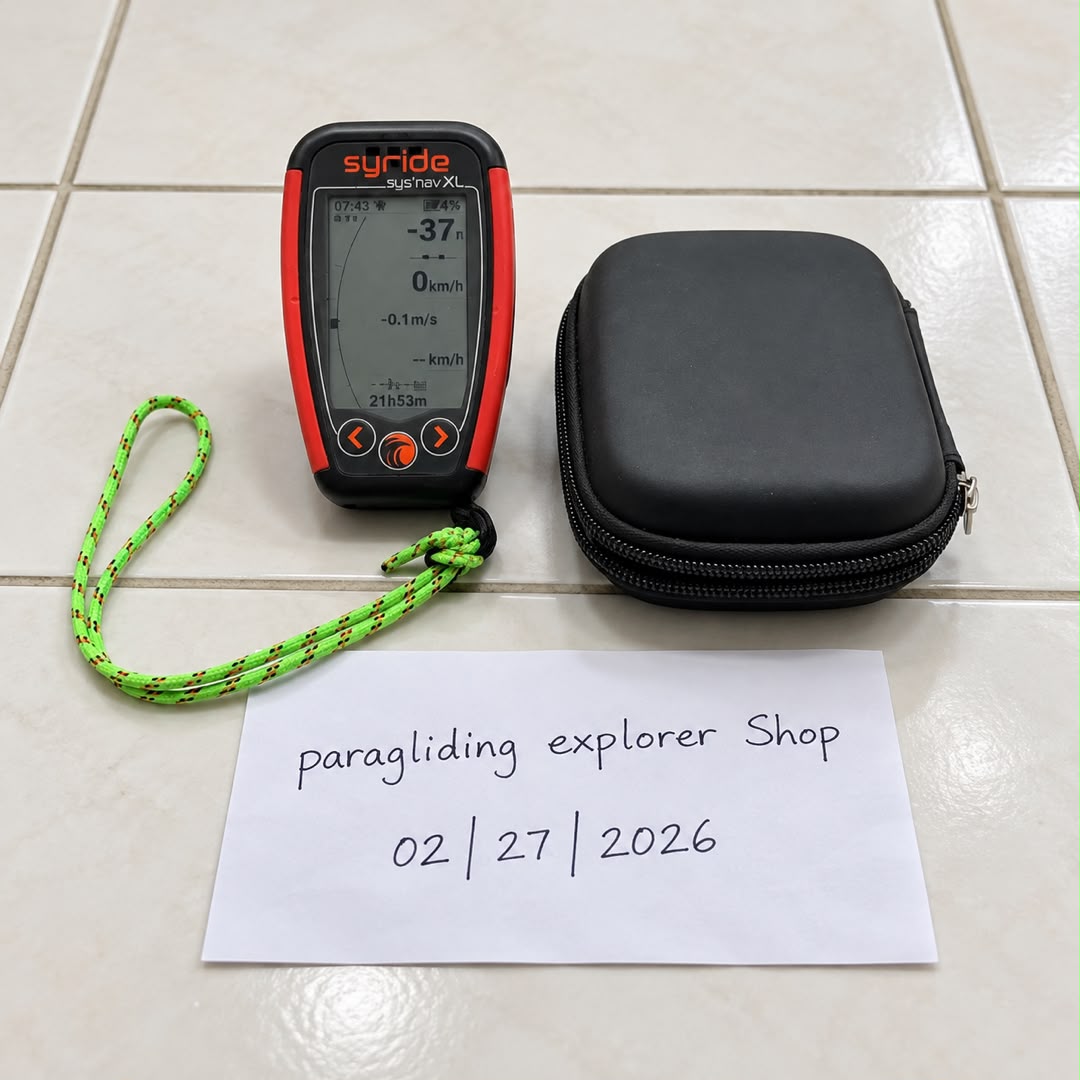

Syride variometro Gps

£250.00
The Syride Vario GPS is offered in excellent condition and has been professionally inspected to confirm its overall quality, condition, and readiness for use. It has been carefully checked and is reported to have no damage, no repairs, no cracks, no tears, and no significant defects. The instrument has been well maintained and is ready for many more flights and jumps.
Every component has been carefully inspected, including the main instrument housing, display, buttons and controls, GPS functionality, variometer system, charging connection, battery, mounting points, protective casing, and related accessories. The unit has been checked for previous repairs, impact damage, excessive wear, moisture damage, and other visible defects.
Included components:
- Syride Vario GPS instrument
- Display and control buttons
- Integrated variometer system
- GPS functionality
- Battery
- Charging connection/cable, if included
- Mounting system, if included
- Protective/storage case, if included
- Related accessories, if included
No tears, repairs, cracks, or significant damage have been identified. The instrument remains clean, functional, and well maintained.
The Syride Vario GPS is ready to use and ready for many more flights and jumps again. It is an excellent option for thermal soaring, recreational flying, cross-country flying, navigation support, flight tracking, and pilot progression. As this is flight equipment, a qualified professional should complete the appropriate pre-flight inspection before use.
Syride variometro Gps
Syride Vario GPS
The Syride Vario GPS has been designed to provide pilots with useful flight information in a compact and practical instrument. By combining variometer functionality with GPS-based flight data, a more informed flying experience can be supported during recreational soaring, thermal flying, cross-country flights, and pilot progression.
Essential flight information can be monitored while the pilot remains focused on the paraglider and surrounding airspace. Consequently, the instrument can be used as a valuable addition to a modern free-flight setup.
Furthermore, GPS-based information can be used to support navigation, flight tracking, altitude awareness, and post-flight analysis when the applicable features are available on the specific Syride model.
Compact Flight Instrument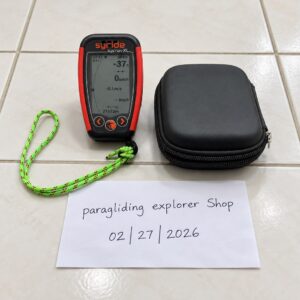
A compact configuration is provided so that the instrument can be incorporated into a suitable cockpit or harness setup without unnecessary bulk.
As flight information is monitored during a session, useful data can be displayed in an accessible format. Consequently, pilots can maintain greater awareness of their flight parameters.
Key Product Highlights
- Syride Vario GPS
- Integrated variometer functionality
- GPS-based flight information
- Compact pilot-oriented design
- Altitude information
- Vertical-speed information
- Flight tracking capability
- Navigation support
- Suitable for thermal flying
- Cross-country applications
- Recreational soaring
- Pilot progression
- Post-flight analysis
- Practical cockpit integration
- Designed for free-flight applications
Variometer Function
The variometer is one of the most useful instruments carried by glider and paraglider pilots.
As the aircraft or paraglider moves vertically through the air, changes in climb and sink can be detected.
Consequently, the pilot can be provided with information that may assist in identifying rising or descending air.
This information can be particularly valuable while thermalling.
Thermal Detection
Thermal flying requires continuous awareness of vertical air movement.
As the pilot encounters rising air, the variometer can provide an indication of the changing vertical movement.
Consequently, potential lift areas can be identified more efficiently.
The instrument should be used as an aid rather than as a substitute for visual observation, airspace awareness, or sound thermal-flying technique.
Sink Information
Information about descending air can also be valuable.
As the paraglider moves through sinking air, the variometer can indicate a change in vertical movement.
Consequently, the pilot can make more informed decisions regarding flight direction and thermal positioning.
GPS Functionality
GPS technology can provide useful information about the pilot’s location and movement.
As satellite positioning is acquired, flight information can be recorded or displayed depending on the specific instrument configuration.
Consequently, navigation and post-flight analysis can be supported.
GPS reception can vary according to environmental conditions and satellite availability.
Altitude Information
Altitude data can be useful during different stages of flight.
As the instrument receives GPS information, altitude-related information can be made available according to the specific model’s capabilities.
Consequently, pilots can gain additional awareness of their position during a flight.
Instrument readings should always be interpreted alongside established flying procedures.
Flight Tracking
Flight tracking can be particularly valuable during cross-country sessions.
As the flight progresses, relevant information can be recorded where supported.
Consequently, the completed route can potentially be reviewed after landing.
This can help pilots analyze distance, direction, altitude changes, and flight development.
Cross-Country Flying
Cross-country flying places greater demands on navigation and situational awareness.
As the pilot travels between thermal systems and geographical locations, GPS-based information can provide useful reference data.
Consequently, the Syride Vario GPS can become a practical component within an appropriate cross-country setup.
However, dedicated navigation planning and backup procedures should always be maintained.
Thermal Soaring
Thermal soaring is another important application.
As rising air is encountered, the variometer can provide information about vertical movement.
Consequently, the pilot can make more informed decisions while circling and searching for stronger lift.
Recreational Flying
The instrument can also be used during general recreational flying.
As pilots become familiar with the displayed information, routine flights can be analyzed more effectively.
Consequently, flying habits and thermal awareness can be progressively developed.
Pilot Progression
Flight instruments can be useful throughout pilot development.
Basic Soaring
Vertical movement can be observed and interpreted.
Thermal Flying
Lift and sink patterns can be studied.
Navigation
GPS-based information can support route awareness.
Cross-Country
Flight tracks can be reviewed and analyzed.
Consequently, the instrument can support continued skill development when used correctly.
Navigation Support
GPS-based navigation information can provide additional situational awareness.
As the pilot moves across the landscape, location and route information can be made available where supported.
Consequently, the instrument can complement traditional navigation methods.
A pilot should never depend exclusively on one electronic device for navigation.
Flight Analysis
Post-flight analysis can provide valuable learning opportunities.
As recorded flight information is reviewed, altitude changes, routes, and thermal activity can be studied.
Consequently, pilots can identify areas where technique or decision-making may be improved.
Cockpit Integration
The Syride Vario GPS can be integrated into an appropriate cockpit or instrument mounting arrangement.
As the display is positioned within the pilot’s field of view, important information can be monitored without unnecessary movement.
Consequently, cockpit organization can be improved.
The mounting system should be secure and should not interfere with flight controls or emergency equipment.
Display Visibility
Clear visibility is important during flight.
As the pilot checks instrument information, the display should remain readable without requiring excessive head movement.
Consequently, the instrument can provide useful information while attention remains directed toward the flying environment.
Audio Feedback
Where supported by the specific Syride configuration, audio indications can complement visual information.
As vertical movement changes, audible feedback can reduce the need to constantly look at the display.
Consequently, attention can remain focused on the paraglider and surrounding airspace.
Battery Management
Electronic flight instruments depend on adequate battery power.
Before flight, the instrument should be charged or provided with sufficient available power.
Consequently, the risk of losing electronic flight information during a session can be reduced.
Battery condition should be monitored regularly.
Pre-Flight Preparation
A complete pre-flight check should be performed before every flight.
Particular attention should be given to:
- Battery level
- GPS reception
- Display
- Buttons
- Mounting system
- Charging connection
- Protective casing
- Audio output, where applicable
- Flight-recording function
- Instrument settings
Consequently, potential issues can be identified before launch.
GPS Reception
GPS acquisition should be confirmed before takeoff when required.
As satellite reception is established, positioning information can become available.
Consequently, flight-recording and navigation functions can operate more effectively.
Tall buildings, dense terrain, and other environmental factors can influence reception.
Weather Awareness
The Syride Vario GPS should complement, rather than replace, weather assessment.
As wind direction, wind speed, cloud development, and thermal activity change, the pilot should continue monitoring the environment.
Consequently, instrument information can be combined with proper flight judgment.
Airspace Awareness
Electronic instruments should never replace visual airspace monitoring.
As the pilot navigates through the flying environment, other aircraft, terrain, cables, and obstacles must remain actively monitored.
Consequently, safe situational awareness can be maintained.
Cross-Country Planning
Before a cross-country flight, the intended route should be planned carefully.
As GPS information can provide positional awareness during flight, route decisions can be supported.
Consequently, navigation can be made more systematic.
However, backup navigation methods should always be available.
Thermalling Applications
The instrument can be particularly useful during thermal searching.
As the variometer indicates changes in vertical movement, the pilot can assess whether a thermal is strengthening or weakening.
Consequently, turning decisions can be refined.
Pilot technique and visual observation remain essential.
Soaring in Variable Conditions
Changing conditions require continuous monitoring.
As lift and sink vary across the flying area, the variometer can provide additional information.
Consequently, the pilot can combine instrument readings with environmental observations.
Flight Safety
The Syride Vario GPS should be regarded as an aid to flight rather than a safety guarantee.
As electronic devices can experience battery depletion, signal loss, malfunction, or environmental limitations, pilots should maintain independent awareness.
Consequently, appropriate backup procedures should always be followed.
Hardware Inspection
The instrument should be inspected regularly.
Particular attention should be given to:
- Housing
- Display
- Buttons
- Mounting points
- Charging port
- Protective components
- Battery condition
- Connections
Consequently, signs of damage can be identified before use.
Screen Protection
The display should be protected from unnecessary impacts and abrasion.
As the instrument is transported and mounted repeatedly, scratches or damage can develop.
Consequently, careful handling is recommended.
Moisture Protection
Electronic instruments should be protected from excessive moisture.
As water can affect electronic components, unnecessary exposure should be avoided.
Consequently, the instrument should be dried appropriately if it becomes wet.
The manufacturer’s water-resistance limitations should always be observed.
Storage
The Syride Vario GPS should be stored in a clean, dry location.
Furthermore, prolonged exposure to extreme heat, cold, moisture, or direct sunlight should be avoided.
Consequently, the instrument can be better protected between flying sessions.
Transportation
A suitable protective case or cockpit arrangement should be used during transportation.
As other equipment can contact the instrument, unnecessary impacts should be avoided.
Consequently, the display and housing can be better protected.
Maintenance
Maintenance should be performed according to the manufacturer’s recommendations.
As the instrument accumulates use, battery condition, physical condition, charging connections, and mounting hardware should be monitored.
Consequently, reliable operation can be supported.
Post-Flight Routine
After landing, the instrument should be checked for physical damage.
As flight information may have been recorded, relevant data can be saved or transferred according to the applicable model and software ecosystem.
Consequently, valuable flight information can be preserved for future analysis.
Flight Data Analysis
Recorded data can be useful for pilot development.
As previous flights are reviewed, altitude changes, routes, distances, and thermal activity can be studied where supported.
Consequently, patterns can be identified and future flight planning can be improved.
Suitable Applications
The Syride Vario GPS can be considered for:
- Recreational paragliding
- Thermal soaring
- Cross-country flying
- Navigation support
- Flight tracking
- Flight analysis
- Pilot progression
- General free-flight activities
Consequently, a broad range of flying applications can be supported.
Main Benefits at a Glance
- Syride Vario GPS
- Variometer functionality
- GPS-based flight information
- Compact design
- Altitude awareness
- Vertical-speed information
- Thermal-flying support
- Cross-country applications
- Navigation assistance
- Flight tracking
- Post-flight analysis
- Pilot progression
- Practical cockpit integration
- Portable electronic flight solution
Why Choose the Syride Vario GPS?
The Syride Vario GPS can be selected by pilots who want useful electronic flight information without unnecessarily complicating their cockpit.
By combining variometer functionality with GPS-based capabilities, the instrument can support thermal awareness, navigation, flight recording, and post-flight analysis where supported by the exact model.Syride variometro Gps
Furthermore, its compact format allows it to be incorporated into an appropriate harness or cockpit configuration.
A Practical Flight Instrument
The Syride Vario GPS provides a useful combination of vertical-movement information and GPS-based flight data for suitable free-flight applications.Syride variometro Gps
Whether it is being used for thermal soaring, recreational flying, cross-country flights, navigation support, flight tracking, or pilot progression, the instrument can provide valuable information when correctly configured and operated.
For pilots seeking a Syride Vario GPS with practical variometer functionality, GPS-based flight information, compact integration, and useful flight-analysis potential, this instrument can be a valuable addition to a compatible paragliding setup.Syride variometro Gps
Before every flight, battery level, GPS reception, display condition, controls, mounting system, and relevant settings should be checked. Electronic flight information should always be treated as supplementary to proper pilot training, visual observation, weather awareness, airspace awareness, and established flight-safety procedures.
Syride Vario GPS – Practical Use and Flight Performance
Practical Flight Applications
The Syride Vario GPS can be incorporated into a modern paragliding cockpit to provide useful information during different stages of flight. By combining variometer feedback with GPS-based data, greater awareness of vertical movement, position, and flight progress can be supported.Syride variometro Gps
As the pilot becomes more familiar with the instrument, its information can be incorporated naturally into the normal flying routine. Consequently, less attention may be required for basic instrument interpretation.
Thermal Flying
Thermal flying is one of the most valuable applications for a variometer.
As rising air is encountered, changes in vertical speed can be indicated by the instrument. Consequently, the pilot can receive an additional reference when searching for and maintaining lift.
Furthermore, audible or visual feedback, where available on the specific model, can complement the pilot’s observation of the surrounding environment.Syride variometro Gps
Finding Lift
Lift can vary significantly within a thermal.Syride variometro Gps
As the pilot moves through different portions of rising air, the variometer can indicate changes in climb or sink.
Consequently, turning decisions can be refined while the pilot searches for stronger sections.
The instrument should always be used together with visual observation and established thermal-flying techniques.
Centering Thermals
Once lift has been located, the thermal can be centered through coordinated turns.
As stronger and weaker areas are encountered, changes in vertical movement can be observed.
Consequently, the pilot can adjust the turn according to the developing thermal.Syride variometro Gps
Cross-Country Flying
Cross-country flying places additional demands on navigation and situational awareness.
As the pilot moves between thermals, GPS-based information can provide useful positional and flight data where supported.Syride variometro Gps
Consequently, route awareness can be improved.Syride variometro Gps
The instrument should remain a supplementary navigation aid rather than the sole source of navigation information.
Flight Recording
Flight-recording functionality, where supported by the specific model, can be useful for reviewing completed flights.
As the flight progresses, relevant data can be recorded.Syride variometro Gps
Consequently, the route and flight characteristics can potentially be analyzed after landing.
Post-Flight Analysis
Post-flight analysis can be valuable for improving technique.
As recorded information is reviewed, changes in altitude, route, distance, and flight duration can be examined where supported.Syride variometro Gps
Consequently, pilots can identify patterns and areas for improvement.
GPS-Based Awareness
GPS information can provide additional awareness of the pilot’s position.
As satellite positioning is acquired, location-related information can be made available according to the instrument’s capabilities.
Consequently, the pilot can have another reference when navigating suitable cross-country routes.
Navigation Support
Navigation can be supported by GPS-based information.Syride variometro Gps
As the pilot progresses along a planned route, positional data can help provide additional orientation.
Consequently, route management can become more systematic.
However, maps, terrain awareness, airspace information, and backup navigation methods should always be maintained.
Altitude Monitoring
Altitude information can be useful throughout a flight.Syride variometro Gps
As the pilot climbs and descends, altitude-related data can provide additional awareness.
Consequently, the pilot can combine instrument readings with visual references and established flight procedures.
Vertical Speed
Vertical-speed information is central to variometer operation.
As the paraglider enters rising or sinking air, changes can be indicated.
Consequently, the pilot can gain another reference when evaluating the surrounding air mass.
Sink Detection
Sink can be just as important as lift.Syride variometro Gps
As descending air is encountered, the instrument can provide feedback where the applicable functionality is available.
Consequently, the pilot can evaluate whether continuing on the current flight path is appropriate.
Soaring
During general soaring, the instrument can provide continuous information about vertical movement.
As the pilot moves around the flying area, changes in climb and sink can be monitored.
Consequently, the flying experience can become more informed and measurable.
Long Flights
Long-duration flights require careful management of attention and equipment.
As the flight continues, battery status and instrument readability should be monitored.
Consequently, electronic assistance can remain available throughout the intended session.
The pilot should always maintain sufficient reserves and avoid relying on an electronic device beyond its known operating limitations.Syride variometro Gps
Cockpit Placement
The instrument should be mounted where it can be viewed comfortably.
As the pilot checks flight information, excessive head movement should be avoided.
Consequently, the instrument can remain useful without unnecessarily distracting from the paraglider and surrounding airspace.Syride variometro Gps
Display Orientation
A suitable display orientation can improve readability.
As information is presented within the pilot’s normal viewing area, relevant data can be interpreted more efficiently.
Consequently, cockpit organization can be improved.Syride variometro Gps
Audio Feedback
Where audio feedback is available, it can reduce the need to constantly look at the display.
As vertical movement changes, audible indications may provide additional information.
Consequently, attention can remain focused on the wing, terrain, and surrounding traffic.
Battery Management
Battery management should be treated as part of normal flight preparation.Syride variometro Gps
Before launch, sufficient charge should be confirmed.
Consequently, the possibility of losing electronic information during flight can be reduced.
Battery performance can vary with age, temperature, usage, and storage conditions.
Charging
The appropriate charging method should be used according to the manufacturer’s instructions.
As the battery is charged correctly, reliable operation can be supported.
Consequently, unnecessary battery-related problems can be reduced.Syride variometro Gps
The charging connection should be kept clean and protected from moisture.
Pre-Flight Inspection
A pre-flight instrument check should be completed before every flight.Syride variometro Gps
The following should be verified:
- Battery level
- Display operation
- Buttons or controls
- GPS acquisition
- Audio output, where applicable
- Charging connection
- Mounting system
- Protective casing
- Flight-recording settings
- Relevant instrument settings
Consequently, potential problems can be identified before launch.Syride variometro Gps
GPS Acquisition
GPS acquisition should be checked before takeoff when GPS functions are required.
As satellite positioning becomes available, location-related functions can be activated according to the model.
Consequently, flight tracking and navigation features can operate as intended.
Environmental conditions can influence GPS reception.Syride variometro Gps
Weather Assessment
The Syride Vario GPS should complement proper weather assessment.
As wind, cloud development, turbulence, and thermal activity change, the pilot should continue monitoring the environment directly.Syride variometro Gps
Consequently, electronic information can be combined with sound aviation judgment.
Airspace Awareness
Instrument use should never reduce visual awareness.Syride variometro Gps
As the pilot monitors the display, other aircraft, terrain, cables, power lines, and obstacles must continue to be observed.
Consequently, the instrument should be used only as a supplementary information source.
Mountain Flying
Mountain environments can introduce rapidly changing conditions.
As terrain influences airflow, strong lift, sink, rotor, and turbulence can be encountered.
Consequently, pilots should use appropriate mountain-flying knowledge and experience.Syride variometro Gps
The instrument can provide useful information, but environmental judgment remains essential.Syride variometro Gps
Coastal Flying
Coastal conditions can involve changing wind patterns and terrain effects.Syride variometro Gps
As the pilot moves along the coastline, wind direction and strength can change.Syride variometro Gps
Consequently, instrument information should be interpreted alongside direct environmental observation.
Competition-Oriented Flying
Experienced pilots may use flight instruments as part of a more advanced setup.
As route decisions are made, GPS-based information can provide useful positional references where supported.
Consequently, flight planning can be approached more systematically.Syride variometro Gps
Competition use should always follow applicable event rules and safety requirements.
Pilot Training
The instrument can also be useful during pilot development.
As learners become familiar with climb and sink information, greater understanding of air movement can be developed.
Consequently, the instrument can become a useful educational aid when used under appropriate instruction.
Building Thermal Awareness
Variometer information can help reinforce observations made by the pilot.Syride variometro Gps
As climb indications are compared with visual cues and aircraft movement, patterns can become easier to recognize.
Consequently, thermal awareness can gradually improve.Syride variometro Gps
Improving Flight Efficiency
Recorded flight information can help experienced pilots evaluate their flying.
As completed flights are reviewed, route choices, altitude management, and thermal decisions can be examined.
Consequently, future flights can be planned more effectively.Syride variometro Gps
Flight Data
Depending on the specific Syride model, different flight parameters may be available.
These can include appropriate combinations of:
- Position
- Altitude
- Vertical speed
- Track
- Distance
- Flight duration
- Route information
- Flight-recording data
Consequently, useful information can be available during and after flight.
Exact features should be verified against the specific model being sold.
Instrument Accuracy
Electronic flight information should be interpreted within the limitations of the device.
As GPS and sensor measurements can be affected by environmental and technical factors, readings should not be treated as absolute.Syride variometro Gps
Consequently, pilots should maintain independent awareness and use appropriate aviation judgment.
Maintenance
Routine maintenance should be performed according to the manufacturer’s recommendations.
As the instrument accumulates use, the housing, display, controls, battery, mounting system, and charging connection should be checked.Syride variometro Gps
Consequently, potential problems can be identified before they affect a flight.
Housing Inspection
The external housing should be examined for cracks, deformation, and impact marks.
As the instrument may be exposed to transport and cockpit handling, physical damage should not be overlooked.
Consequently, questionable equipment should be professionally assessed before use.
Display Care
The display should be protected from scratches and impacts.
As the screen is repeatedly exposed to handling, careful transportation can help preserve visibility.
Consequently, flight information can remain easier to read.Syride variometro Gps
Button and Control Inspection
Buttons and controls should operate consistently.
As incorrect or intermittent inputs can affect settings, any unusual behavior should be investigated.
Consequently, reliable instrument operation can be maintained.
Moisture Protection
The instrument should be protected from unnecessary moisture.
As electronic components can be affected by water exposure, the manufacturer’s environmental limitations should always be followed.Syride variometro Gps
Consequently, the instrument should be dried appropriately if moisture is encountered.
Storage
The Syride Vario GPS should be stored in a clean, dry, and protected location.Syride variometro Gps
Extreme temperatures, prolonged sunlight, and excessive humidity should be avoided.
Consequently, the instrument can be better preserved between flying sessions.Syride variometro Gps
Transportation
A suitable protective case or cockpit bag should be used during transportation.
As other equipment can strike the instrument, unnecessary impact should be prevented.
Consequently, the housing and display can be protected more effectively.
Post-Flight Routine
After landing, the instrument should be checked for physical damage.
As recorded data may be available, the flight can be saved or transferred according to the specific model’s capabilities.
Consequently, valuable flight information can be retained for later analysis.
Software and Data Management
Where the applicable Syride ecosystem supports flight-data transfer or analysis, recorded information can be reviewed after landing.Syride variometro Gps
As flight data is organized, previous sessions can be compared.
Consequently, progress and flying patterns can be evaluated over time.
Practical Applications
The Syride Vario GPS can be considered for:
- Recreational paragliding
- Thermal soaring
- Cross-country flying
- Flight tracking
- Navigation support
- Vertical-speed awareness
- Flight-data analysis
- Pilot progression
- Long-duration soaring
- Suitable competition-oriented applications
Main Benefits
- Syride Vario GPS
- Variometer functionality
- GPS-based information
- Vertical-speed awareness
- Altitude information
- Flight tracking
- Navigation support
- Thermal-flying assistance
- Cross-country applications
- Post-flight analysis
- Compact cockpit integration
- Pilot progression support
- Practical free-flight functionality
Why Choose the Syride Vario GPS?
The Syride Vario GPS can be a valuable addition to a suitable paragliding setup when useful flight information and compact instrument integration are desired.
By combining variometer information with GPS-based capabilities, greater awareness of vertical movement and flight position can be supported.Syride variometro Gps
Furthermore, the instrument can provide useful information for pilots developing thermal skills as well as experienced pilots undertaking longer cross-country flights.Syride variometro Gps
A Practical Instrument for Modern Free Flight
The Syride Vario GPS provides a useful combination of flight-information functionality in a compact format.
Whether it is being used for thermal soaring, recreational flying, cross-country navigation, flight tracking, or pilot progression, its usefulness will depend on the exact model configuration, correct setup, and appropriate pilot technique.
For pilots seeking a Syride Vario GPS that can provide practical variometer feedback, GPS-based information, and useful flight-analysis potential, it can be incorporated into a compatible cockpit as part of a comprehensive free-flight system.
Before every flight, battery level, display condition, GPS reception, controls, mounting system, and relevant settings should be checked. The instrument should always be treated as supplementary equipment and should never replace proper pilot training, weather assessment, visual observation, airspace awareness, or established flight-safety procedures.
Be the first to review “Syride variometro Gps”
Related products


Used Gliders

Used Gliders


Used Gliders


Used Gliders


Used Gliders


Used Gliders
Used Gliders


Used Gliders
Reviews
There are no reviews yet.