





Ozone Delta 5


£1,700.00
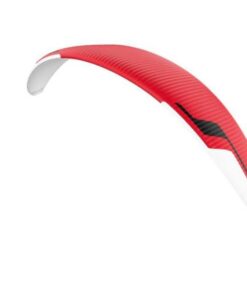
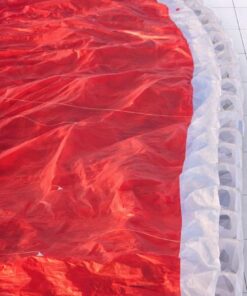
The Ozone Delta 5 is offered in excellent condition and has been professionally inspected to confirm its overall condition, quality, and readiness for use. It has been carefully checked and is reported to have no tears, no damage, no repairs, no punctures, and no significant structural defects. It has been well maintained and is ready for many more flights and jumps.
Every major component has been inspected, including the main canopy, fabric, seams, stitching, lines, risers, brake lines, brake handles, connection points, speed system, pulleys, carabiner connection areas, and reserve-system connection points. The wing has also been checked for abrasion, excessive wear, previous repairs, deformation, and other visible issues.
Included components:
- Ozone Delta 5 paraglider
- Main canopy
- Complete line set
- Risers
- Brake lines and handles
- Speed system components
- Pulleys and connection hardware
- Carabiner connection points
- Reserve connection points
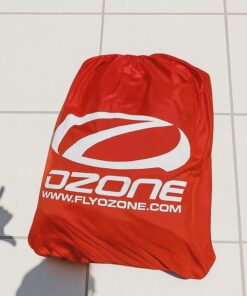
- Storage/transport bag, if included
- Other included accessories
No tears, repairs, or significant damage have been identified. The wing remains clean, well cared for, and in excellent overall condition.
The Ozone Delta 5 is ready to use and ready for many more flights and jumps again. It is an excellent option for thermal soaring, recreational flying, ridge soaring, and cross-country flying. As this is safety-critical equipment, the required professional pre-flight inspection should always be completed before returning it to flight.
Ozone Delta 5
The Ozone Delta 5 has been developed for pilots seeking an engaging combination of performance, handling, efficiency, and cross-country capability. A refined wing platform is provided so that confident pilots can explore longer flights while maintaining responsive control and predictable handling.
Designed for experienced recreational and cross-country pilots, the Delta 5 can be used for thermal soaring, XC flying, active piloting, and everyday free-flight sessions. Furthermore, a balanced relationship between performance and accessibility is offered, allowing progression to be supported without making the wing unnecessarily demanding.
Performance-Oriented Design
An efficient aerodynamic profile is incorporated so that glide performance and speed can be balanced with practical handling.
As the wing moves through the air, aerodynamic efficiency is generated across the canopy. Consequently, forward performance can be maintained while the pilot manages changing air conditions.
Moreover, the wing can provide useful feedback during active piloting and thermal exploration.
Key Product Highlights
- Ozone Delta 5
- Performance-oriented paraglider
- Designed for experienced pilots
- Efficient aerodynamic profile
- Responsive handling
- Stable flight characteristics
- Strong glide potential
- Thermal-soaring capability
- Cross-country applications
- Active-piloting performance
- Efficient climb characteristics
- Controlled speed
- Precise turning
- Pilot progression potential
- Suitable for recreational XC flying
Efficient Glide
Glide efficiency is particularly valuable during cross-country flying.
As the pilot leaves one thermal and transitions toward another, forward performance becomes increasingly important.
Consequently, efficient glide can help valuable altitude be preserved during transitions.
The actual glide performance will depend on air conditions, pilot technique, wing loading, and overall equipment configuration.
Thermal Performance
Thermal flying requires a responsive yet manageable wing.
As rising air is encountered, the pilot can initiate controlled turns to remain within the lift.
Consequently, altitude can be gained efficiently.
Furthermore, useful feedback can be provided through the controls as the wing moves through stronger and weaker portions of a thermal.
Climbing Efficiency
Efficient climbing can be valuable when multiple pilots are sharing the same thermal.
As the wing is turned through rising air, lift can be converted into altitude.
Consequently, the pilot can establish a useful height advantage before beginning the next transition.
Responsive Handling
Responsive handling allows precise pilot inputs to be transmitted through the wing.
As brake and weight-shift inputs are applied, directional changes can be generated.
Consequently, turns can be controlled more accurately.
The response should always be matched to the pilot’s experience and the prevailing conditions.
Turning
Controlled turning is essential for thermal and recreational flying.
As the pilot initiates a turn, the wing can respond progressively.
Consequently, the desired flight path can be maintained.
Smooth control inputs should be favored, particularly when flying close to terrain or other pilots.
Active Piloting
Active piloting is important when air becomes unsettled.
As the wing encounters changes in pressure and airflow, the pilot may need to make appropriate corrections.
Consequently, wing energy and flight path can be managed more effectively.
The Delta 5 can provide useful feedback for pilots who have developed appropriate active-piloting skills.
Cross-Country Flying
Cross-country flying is a major application for a performance-oriented wing.
As the pilot travels between thermal systems, efficient transitions become increasingly important.
Consequently, glide performance, speed management, navigation, and thermal awareness can work together.
The Delta 5 can be considered for pilots looking to develop longer and more ambitious XC flights.
Transition Performance
Transitions between thermals require careful speed management.
As the pilot leaves lift, an appropriate amount of speed can be maintained.
Consequently, the next thermal can potentially be reached with useful altitude remaining.
Wind strength, sink, terrain, and thermal spacing must always be evaluated.
Speed Management
Speed should be managed according to the conditions.
As the pilot encounters stronger headwind or sinking air, appropriate speed adjustments may be beneficial.
Consequently, the wing can be flown efficiently while maintaining suitable control.
Speed Bar Use
Where the specific configuration includes a compatible speed system, speed-bar input can be used to increase forward speed.
As the wing’s angle of attack is adjusted, additional speed can be generated.
Consequently, transitions can potentially be completed more efficiently.
Speed-system use should always be performed according to manufacturer guidance and pilot training.
Stability
Stability is important during longer flights.
As the wing travels through changing air, predictable reactions can help the pilot maintain control.
Consequently, attention can remain focused on route planning, thermal activity, terrain, and airspace.
Pilot Feedback
Useful feedback can help experienced pilots interpret the surrounding air.
As pressure changes are transmitted through the controls and harness system, information about the wing’s behavior can be perceived.
Consequently, active corrections can be made when necessary.
Launch Preparation
A careful pre-flight routine should always be completed.
The canopy, lines, risers, harness connections, reserve system, carabiners, and other safety-critical components should be checked.
Consequently, potential setup problems can be identified before launch.
Takeoff
Controlled inflation is essential during takeoff.
As the canopy rises overhead, the pilot should monitor its position and symmetry.
Consequently, a controlled transition into flight can be achieved.
Launch technique should always be adapted to wind direction, wind strength, terrain, and pilot experience.
Forward Launch
A forward launch can be used in suitable wind conditions.
As the canopy rises, the pilot should maintain appropriate control and direction.
Consequently, the wing can be stabilized before the pilot commits to takeoff.
Reverse Launch
In stronger conditions, a reverse-launch technique may be preferred by appropriately trained pilots.
As the canopy is brought overhead, the pilot can maintain control through coordinated inputs.
Consequently, the launch can be completed in a controlled manner.
Soaring
General soaring can be supported by the Delta 5.
As the pilot searches for rising air, the wing can be used for efficient turns and transitions.
Consequently, longer periods of unpowered flight can be achieved when conditions provide sufficient lift.
Ridge Soaring
Ridge soaring requires awareness of terrain and wind flow.
As wind is deflected upward by suitable terrain, lift can be created.
Consequently, the pilot can maintain altitude by flying within the appropriate lift band.
Terrain clearance and airspace awareness should always be prioritized.
Mountain Flying
Mountain flying can provide excellent soaring opportunities, but conditions can change rapidly.
As airflow interacts with ridges and valleys, strong lift, sink, turbulence, or rotor can develop.
Consequently, appropriate mountain-flying experience is required.
Coastal Flying
Coastal flying can involve changing wind patterns and terrain effects.
As the pilot moves along the coastline, wind strength and direction may vary.
Consequently, continuous environmental assessment is required.
Cross-Country Navigation
Navigation is an important part of XC flying.
As the pilot moves between terrain features and thermal sources, route decisions must be made carefully.
Consequently, GPS instruments, maps, terrain knowledge, and visual references can be used together.
Electronic navigation should never replace independent situational awareness.
Flight Instruments
A suitable variometer and GPS instrument can complement the wing.
As climb, sink, altitude, and position information are displayed, flight decisions can be supported.
Consequently, thermal searching and cross-country navigation can become more systematic.
Harness Compatibility
The wing should be paired with a compatible harness.
As the harness influences pilot position and weight distribution, its characteristics can affect handling.
Consequently, compatibility and correct adjustment should be confirmed before flight.
Pilot Weight
Pilot weight should always be considered when selecting a wing.
As wing loading changes, handling and performance can also change.
Consequently, the correct size and loading range should be confirmed against the manufacturer’s specifications.
Weather Conditions
Weather assessment should be completed before every flight.
As wind, cloud development, thermal strength, and turbulence change, the demands placed on the pilot can increase.
Consequently, flying decisions should be adapted continuously.
Turbulent Conditions
Turbulent conditions require appropriate experience.
As the wing encounters rapid changes in airflow, active control may be required.
Consequently, pilots should avoid conditions that exceed their training or experience.
Landing
A controlled landing requires appropriate approach planning.
As altitude decreases, the pilot should maintain awareness of wind direction, landing area, terrain, and surrounding traffic.
Consequently, a controlled final approach can be established.
Post-Landing Inspection
The wing should be inspected after unusual landings or significant impacts.
As damage may not always be immediately visible, the canopy, lines, risers, and connection areas should be examined carefully.
Consequently, uncertain equipment can be professionally assessed before its next flight.
Canopy Inspection
The canopy should be checked regularly for:
- Tears
- Punctures
- Abrasion
- Damaged stitching
- Discoloration
- Fabric deterioration
- Deformation
Consequently, developing problems can be identified early.
Line Inspection
Lines should be inspected for cuts, fraying, knots, abrasion, and abnormal stretching.
As lines are exposed to repeated loading, UV radiation, moisture, and environmental conditions, deterioration can occur.
Consequently, professional line inspection should be performed according to the manufacturer’s requirements.
Riser Inspection
Risers should be checked before use.
As they transfer loads between the lines and harness, their condition is critical.
Consequently, damaged, excessively worn, or questionable risers should not be used until properly assessed.
Carabiner Inspection
Carabiners should be inspected carefully.
As they form part of the pilot’s attachment system, corrosion, deformation, damage, or malfunction should never be ignored.
Consequently, appropriate replacement should be made when required.
Reserve System
The reserve parachute system should be inspected and maintained according to manufacturer requirements.
As the reserve is an emergency safety system, correct installation and deployment readiness are essential.
Consequently, reserve maintenance should be entrusted to qualified personnel where required.
Packing
Correct packing helps preserve the canopy.
As excessive folding, compression, moisture, and abrasion can contribute to deterioration, appropriate packing procedures should be followed.
Consequently, the wing can be better protected between flights.
Moisture Protection
The wing should be completely dried after exposure to rain or moisture.
As prolonged damp storage can contribute to material deterioration, wet equipment should not be stored for extended periods.
Consequently, proper drying should be included in the post-flight routine.
UV Protection
Prolonged sunlight exposure can contribute to fabric degradation.
Therefore, unnecessary exposure should be minimized.
Consequently, the canopy can be better preserved over time.
Transportation
The Delta 5 should be transported in a suitable protective bag.
Sharp objects should be kept away from the canopy and lines.
Consequently, accidental punctures and abrasion can be reduced.
Storage
The wing should be stored in a cool, dry, and ventilated environment.
Extreme heat, humidity, chemicals, and unnecessary UV exposure should be avoided.
Consequently, the equipment can be better protected between flying sessions.
Maintenance
Regular maintenance should be completed according to manufacturer recommendations.
As flight hours accumulate, professional inspection may be appropriate.
Consequently, fabric condition, line condition, risers, and safety-critical components can be monitored.
Pilot Progression
The Delta 5 can be considered for pilots progressing toward more advanced cross-country flying.
Thermal Flying
Lift-finding and thermal-centering skills can be developed.
Soaring
Longer flights can be practiced.
XC Flying
Navigation and thermal-transition skills can be refined.
Advanced Flying
Experienced pilots can develop more efficient speed and route-management techniques.
Consequently, the wing can remain useful as pilot experience develops.
Practical Applications
The Ozone Delta 5 can be considered for:
- Recreational paragliding
- Thermal soaring
- Ridge soaring
- Cross-country flying
- Mountain flying
- Coastal soaring
- Active piloting
- Long-distance flights
- Pilot progression
- Performance-oriented free flight
Main Benefits at a Glance
- Ozone Delta 5
- Performance-oriented paraglider
- Efficient glide
- Responsive handling
- Stable flight characteristics
- Thermal-soaring capability
- Cross-country potential
- Effective climb performance
- Controlled speed
- Active-piloting feedback
- Precise turning
- Suitable for experienced pilots
- Progression-oriented platform
Why Choose the Ozone Delta 5?
The Ozone Delta 5 can be selected by pilots who want a capable wing for thermal soaring and cross-country progression.
A balance between performance and practical handling is provided so that pilots can explore longer flights while retaining useful control.
Furthermore, efficient glide and responsive handling can make the wing suitable for pilots who want to develop their XC skills without moving immediately into an extremely demanding high-performance category.
A Performance-Oriented Paraglider
The Ozone Delta 5 provides a compelling combination of glide efficiency, responsive handling, thermal performance, and cross-country capability.
Whether it is being used for thermal soaring, ridge flying, recreational XC, mountain flying, active piloting, or longer-distance free flight, performance will depend on the pilot, conditions, wing loading, and complete equipment configuration.
For pilots seeking an Ozone Delta 5 with strong glide potential, responsive control, efficient climbing, and versatile cross-country performance, this wing can provide an excellent platform for appropriately experienced pilots.
Before every flight, the canopy, lines, risers, harness connections, carabiners, reserve system, and other safety-critical components should be carefully inspected. Manufacturer service requirements should always be followed, and the wing should only be flown within the approved operating range and conditions appropriate for the pilot’s training and experience.
Ozone Delta 5 – Practical Use and Performance
Designed for Progression
The Ozone Delta 5 can be used by pilots who want to develop stronger thermal, soaring, and cross-country skills while maintaining a responsive and manageable flying experience. A performance-oriented platform is provided, while useful feedback can still be received through the controls.
As experience is developed, the wing can be used for increasingly ambitious flights. Consequently, pilots can progress from local soaring toward longer XC routes when their training and conditions permit.
Thermal Flying
Thermal flying is one of the key applications for the Delta 5.
As rising air is encountered, controlled turns can be initiated to remain within the lift. Consequently, altitude can be gained efficiently.
Furthermore, the wing can provide useful information through the brake controls and risers, allowing changes in air movement to be recognized.
Thermal Centering
Once a thermal has been located, centering it efficiently becomes important.
As stronger and weaker portions of lift are encountered, small changes in turn radius and direction can be introduced.
Consequently, the strongest section of the thermal can potentially be maintained.
Pilot technique remains essential, and the wing should always be flown within the conditions appropriate to the pilot’s ability.
Weak Lift
Weak thermals require careful control.
As small areas of rising air are encountered, efficient turning and energy management become increasingly valuable.
Consequently, altitude can potentially be preserved while the thermal is developed.
A smooth flying style should be maintained rather than relying on abrupt control inputs.
Strong Lift
Strong thermals require active awareness.
As lift increases, the pilot may need to manage bank angle, speed, and position within the thermal.
Consequently, a controlled climb can be maintained.
The pilot should always remain aware of surrounding traffic and changing atmospheric conditions.
Ridge Soaring
The Delta 5 can be used for suitable ridge-soaring applications.
As wind encounters a ridge or suitable terrain, upward airflow can be created.
Consequently, the pilot can remain airborne by maintaining an appropriate position within the lift band.
Terrain clearance and wind strength should be monitored continuously.
Coastal Soaring
Coastal flying can provide consistent ridge lift in suitable conditions.
As wind interacts with coastal terrain, rising air can be generated.
Consequently, extended soaring can sometimes be achieved.
However, coastal conditions can change quickly, so careful monitoring should always be maintained.
Cross-Country Flying
Cross-country flying is a natural application for the Delta 5.
As the pilot leaves one thermal and begins a transition, glide efficiency becomes important.
Consequently, valuable altitude can be preserved while progressing toward the next source of lift.
Route planning and weather assessment should always be completed before departure.
Thermal Transitions
Transitions require efficient speed management.
As the pilot leaves a thermal, an appropriate amount of speed can be maintained.
Consequently, the next thermal can potentially be reached with useful altitude remaining.
Wind direction, sink, terrain, and cloud development should all be considered.
Headwind Transitions
When flying into headwind, speed management becomes particularly important.
As the pilot encounters increased airspeed demand, the wing can be flown at an appropriate accelerated setting where permitted and correctly operated.
Consequently, forward progress can be maintained more efficiently.
Speed-system use should always follow the manufacturer’s recommendations and pilot training.
Tailwind Transitions
Tailwind conditions can allow faster ground progression.
As the pilot moves with the wind, route selection and thermal positioning become important.
Consequently, longer distances can potentially be covered efficiently.
Cross-Country Route Planning
A successful XC flight requires more than a capable wing.
As the route is planned, terrain, weather, airspace, landing options, wind direction, and potential thermal sources should be considered.
Consequently, decisions can be made before difficult situations develop.
Cloud Flying Awareness
Cloud development should be monitored carefully.
As thermal activity strengthens, cloud bases can develop and conditions can become more demanding.
Consequently, pilots should maintain appropriate separation and follow applicable aviation regulations.
Speed Management
Speed should be adjusted according to the surrounding air.
As sink increases, additional speed may sometimes be appropriate.
Conversely, when lift is encountered, efficient airspeed can be maintained.
Consequently, the pilot can manage altitude and forward progress more effectively.
Speed Bar
Where the specific setup includes a compatible speed system, accelerated flight can be used appropriately.
As the speed system is engaged, the wing’s angle of attack is reduced.
Consequently, forward speed can be increased.
The speed system should only be used according to manufacturer instructions and appropriate pilot training.
Active Piloting
Active piloting is particularly valuable in changing air.
As pressure changes are experienced through the controls, appropriate corrections can be made.
Consequently, wing energy and pitch can be managed more effectively.
Large or abrupt inputs should be avoided unless required by the situation.
Pitch Control
Pitch management contributes to efficient flight.
As the wing moves forward or backward in the air mass, the pilot can use appropriate control inputs.
Consequently, excessive pitching can be reduced.
A balanced flying technique should be maintained.
Roll Control
Roll response influences turning and thermal centering.
As weight-shift and brake inputs are applied, the wing can be directed into the desired bank.
Consequently, controlled turns can be maintained.
Handling
Responsive handling can be valuable when navigating thermals and performing transitions.
As the pilot applies controlled inputs, the wing can respond progressively.
Consequently, directional changes can be made accurately.
Launch Preparation
A complete pre-flight inspection should be performed before every launch.
The following should be checked:
- Canopy
- Lines
- Risers
- Harness
- Carabiners
- Reserve system
- Speed system
- Brakes
- Connection points
Consequently, setup errors can be identified before takeoff.
Forward Launch
A forward launch can be performed in appropriate light-wind conditions.
As the canopy rises, the pilot should monitor its inflation and symmetry.
Consequently, a controlled transition into flight can be achieved.
Reverse Launch
A reverse launch can be used when conditions make it appropriate.
As the canopy is raised overhead, the pilot can maintain control through coordinated inputs.
Consequently, launch can be completed while maintaining awareness of the wing and surrounding environment.
Takeoff
Takeoff should only be committed to after the canopy has been properly inspected and controlled.
As the wing becomes fully pressurized and stable overhead, the pilot can accelerate according to established training.
Consequently, a smooth transition into flight can be achieved.
Landing
Landing preparation should begin with sufficient altitude.
As the pilot approaches the landing area, wind direction, terrain, obstacles, and other traffic should be assessed.
Consequently, a controlled approach can be established.
Final Approach
During final approach, appropriate airspeed and directional control should be maintained.
As altitude decreases, unnecessary turns should be avoided.
Consequently, the landing can be completed more predictably.
Post-Landing Care
The wing should be checked after landing.
As unusual impacts or dragging can expose the equipment to damage, the canopy and lines should be examined.
Consequently, potential problems can be identified before the next flight.
Harness Matching
The wing should be paired with a suitable harness.
As harness geometry affects body position and weight distribution, the handling characteristics can be influenced.
Consequently, compatible equipment should be selected.
Pilot Weight
Pilot weight should be kept within the manufacturer’s approved range for the selected size.
As wing loading changes, handling and performance can also change.
Consequently, the correct wing size should be selected according to official specifications.
Wing Loading
Wing loading affects several aspects of flight behavior.
As loading increases, handling may become more dynamic.
Conversely, lower loading can produce different handling and performance characteristics.
Consequently, pilots should consider the manufacturer’s recommended weight range when selecting a size.
Weather Conditions
Weather should always be assessed before launch.
As wind speed, direction, thermal strength, cloud development, and turbulence change, the suitability of the flight can change as well.
Consequently, pilots should remain prepared to cancel or modify a flight.
Turbulent Air
Turbulent conditions require appropriate pilot experience.
As the wing encounters rapid changes in airflow, active control may be necessary.
Consequently, pilots should avoid conditions beyond their training or comfort level.
Mountain Conditions
Mountain environments can produce strong and rapidly changing airflow.
As terrain interacts with wind, rotor, sink, and strong lift can develop.
Consequently, appropriate mountain-flying knowledge should be possessed before attempting challenging routes.
Airspace Awareness
Airspace awareness must remain continuous.
As the pilot focuses on thermals and navigation, other aircraft, terrain, cables, and obstacles must still be monitored.
Consequently, the instrument and wing should never replace visual observation.
Flight Instruments
A compatible variometer and GPS can complement the Delta 5.
As vertical speed, altitude, and position are monitored, flight decisions can be supported.
Consequently, thermal and navigation tasks can be approached more systematically.Ozone Delta 5
Flight Recording
Where compatible equipment is used, flight data can be recorded.Ozone Delta 5
As completed flights are analyzed, altitude, distance, route, and thermal performance can be reviewed.
Consequently, future flying technique can be improved.Ozone Delta 5
Canopy Inspection
The canopy should be checked for:
- Tears
- Punctures
- Abrasion
- Discoloration
- Damaged seams
- Damaged stitching
- Fabric deterioration
Consequently, developing damage can be identified early.Ozone Delta 5
Line Inspection
Lines should be inspected for cuts, fraying, knots, abrasion, and unusual stretching.
As lines experience repeated loading and environmental exposure, deterioration can occur.
Consequently, manufacturer-recommended line inspections should be maintained.Ozone Delta 5
Riser Inspection
Risers should be checked before each flight.
As they transfer loads between the lines and harness, their condition is safety-critical.
Consequently, worn or damaged risers should not be used until appropriately assessed.
Carabiner Inspection
Carabiners should be checked for correct operation and physical condition.Ozone Delta 5
As they form part of the pilot’s attachment system, damage or malfunction should never be ignored.
Consequently, questionable hardware should be replaced or professionally assessed.Ozone Delta 5
Reserve System
The reserve parachute should be installed and maintained according to manufacturer requirements.
As the reserve provides emergency protection, its condition and deployment system should be checked regularly.
Consequently, reserve readiness can be maintained.Ozone Delta 5
Packing
The wing should be packed according to appropriate manufacturer recommendations.
As excessive compression and incorrect folding can contribute to unnecessary material stress, careful packing should be maintained.
Consequently, the canopy can be better preserved.Ozone Delta 5
Moisture Management
The wing should be dried completely after exposure to moisture.Ozone Delta 5
As damp equipment is stored for extended periods, material deterioration can occur.
Consequently, wet equipment should not be packed away for long-term storage.Ozone Delta 5
UV Protection
Prolonged exposure to sunlight can affect canopy materials.
Therefore, unnecessary UV exposure should be minimized.
Consequently, the wing can be better preserved between flights.Ozone Delta 5
Transportation
The Delta 5 should be transported inside a suitable protective bag.Ozone Delta 5
Sharp objects should be kept away from the canopy.
Consequently, accidental punctures and abrasion can be reduced.Ozone Delta 5
Storage
The wing should be stored in a cool, dry, and ventilated environment.
Extreme heat, chemicals, moisture, and prolonged sunlight should be avoided.
Consequently, material condition can be preserved more effectively.Ozone Delta 5
Maintenance
Regular maintenance should be completed according to manufacturer recommendations.
As flight hours accumulate, professional inspection should be performed at the required intervals.
Consequently, canopy, line, riser, and structural condition can be monitored.Ozone Delta 5
Professional Inspection
Professional inspection is particularly important when the wing has experienced significant use, impact, unusual loading, or uncertain storage conditions.
As some deterioration may not be visible during a basic inspection, qualified assessment can provide additional assurance.
Consequently, safety-critical concerns can be addressed before further flight.
Pilot Progression
The Delta 5 can support progression through several stages.Ozone Delta 5
Thermal Soaring
Thermal-centering skills can be developed.Ozone Delta 5
Ridge Flying
Lift management can be practiced.Ozone Delta 5
Cross-Country
Navigation and transition skills can be refined.Ozone Delta 5
Advanced XC
Speed management and longer-distance decision-making can be developed.Ozone Delta 5
Consequently, the wing can remain useful as experience increases.Ozone Delta 5
Practical Applications
The Ozone Delta 5 can be considered for:
- Recreational paragliding
- Thermal soaring
- Ridge soaring
- Cross-country flying
- Mountain flying
- Coastal soaring
- Active piloting
- Long-distance flights
- Pilot progression
- Performance-oriented free flight
Main Benefits at a Glance
- Ozone Delta 5
- Performance-oriented design
- Efficient glide
- Responsive handling
- Stable flight characteristics
- Strong thermal performance
- Cross-country capability
- Efficient climbing
- Controlled speed
- Useful pilot feedback
- Active-piloting potential
- Suitable for experienced pilots
- Progression-oriented platform
Why Choose the Ozone Delta 5?
The Ozone Delta 5 can be an excellent choice for pilots who want a wing capable of supporting thermal soaring and cross-country progression.Ozone Delta 5
Its performance-focused design can provide efficient glide and responsive handling while remaining suitable for pilots who have developed the necessary skills and experience.
Furthermore, its versatility can make it useful across local soaring, ridge flying, thermal exploration, and longer XC flights.Ozone Delta 5
A Capable Cross-Country Wing
The Ozone Delta 5 provides a balanced combination of performance, handling, efficiency, and practical versatility.
Whether it is being used for thermal soaring, ridge flying, coastal soaring, mountain flying, active piloting, or cross-country flights, performance will depend on wing loading, pilot technique, weather, and the complete equipment configuration.Ozone Delta 5
For pilots seeking an Ozone Delta 5 with efficient glide, responsive handling, strong thermal capability, and cross-country potential, this wing can provide a capable platform for appropriately experienced pilots.
Before every flight, the canopy, lines, risers, harness connections, carabiners, reserve system, brakes, and speed system should be carefully inspected. Manufacturer service requirements should always be followed, and the wing should only be flown within its approved operating range and under conditions appropriate for the pilot’s training and experience.
Be the first to review “Ozone Delta 5”
Related products
Used Gliders

Used Gliders

Used Gliders

Used Gliders


Used Gliders
Used Gliders

Used Gliders

Used Gliders
Reviews
There are no reviews yet.