


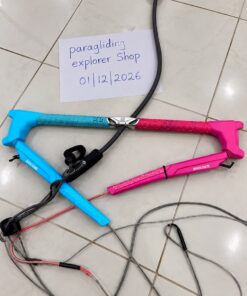
Takoo 5 and harness


£1,300.00
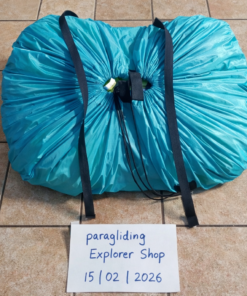
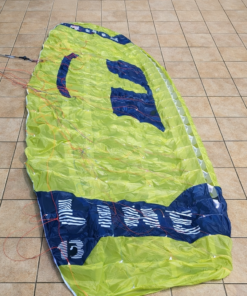
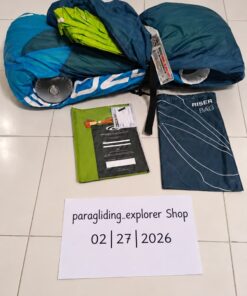
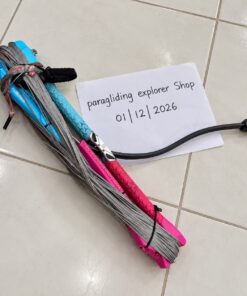
The Niviuk TAKOO 5 tandem paraglider and harness are offered in excellent condition and have been professionally inspected to confirm their overall quality and readiness for use. The equipment has been carefully checked and has no tears, no punctures, no significant damage, and no previous repairs. Everything has been well maintained and is ready to be used again for tandem flights.
All major components have been inspected, including the canopy, leading edge, trailing edge, suspension lines, brake lines, risers, trimmers, connectors, spreader system, harness, buckles, webbing, attachment points, and storage equipment. The canopy has been checked for tears, abrasion, damaged stitching, deformation, and other visible defects, while the harness has been checked for wear and damage.
Included components:
- Niviuk TAKOO 5 tandem paraglider
- Risers and suspension lines
- Brake lines
- Integrated trimmer system
- Tandem spreader system
- Harness
- Harness buckles and attachment points
- Storage/transport bag
- Inner protective bag, if included
- Compression strap
- Repair kit/accessories, if included
No visible tears, damage, or repair work has been identified during the inspection. The complete setup has been kept clean and carefully maintained.
The TAKOO 5 and harness are ready to use again for suitable tandem flights, training, sightseeing, and recreational flying, subject to a qualified pilot’s final pre-flight and professional airworthiness inspection.
Niviuk TAKOO 5 Tandem Paraglider & Harness
A refined tandem-flying experience has been created with the Niviuk TAKOO 5 and harness setup, where stability, comfort, handling, durability, and practical performance have been carefully balanced. The TAKOO 5 was developed as a tandem paraglider for professional operations as well as recreational tandem flying, while a comfortable and appropriately matched harness can be used to complete the flying system.
A redesigned internal structure has been incorporated, while the leading and trailing edges have also been optimized. Consequently, improved force distribution, reduced deformation, efficient handling, and a comfortable flight character can be provided. The model was certified EN/LTF B, and testing was performed using tandem-compatible harness configurations.
Tandem-Focused Design
The TAKOO 5 has been designed specifically around tandem flying requirements.
As the wing is required to carry both pilot and passenger, stability and predictable handling have been prioritized. Consequently, a comfortable platform can be provided for commercial tandem operations and recreational tandem flights.
The wing has been described as suitable for professional dual-pilot operations, while a high degree of stability and passenger comfort has been emphasized.
Key Product Highlights
- Niviuk TAKOO 5 tandem paraglider
- Tandem-focused design
- EN/LTF B certification
- 54-cell construction
- 5.5 flat aspect ratio
- Optimized leading edge
- Optimized trailing edge
- DRS Drag Reduction Structure
- RSD internal structure
- Improved force distribution
- Enhanced attachment-point durability
- Responsive and smooth handling
- Strong passive-safety characteristics
- High pitch stability
- Designed for pilot and passenger comfort
- Four-riser configuration
- Integrated trimmer system
- Color-coded risers
- Compatible tandem harness system
- Harness included with this listing, where specified
- Kargo bag and accessories depending on the supplied package
Leading Edge Optimization
The leading edge has been redesigned with several Niviuk technologies.
As the 3DL, 3DP, SLE, and TNT concepts have been incorporated, unwanted creasing can be reduced while canopy tension can be improved. Consequently, a cleaner aerodynamic surface can be maintained.
Furthermore, improved structural support can be provided, allowing turbulence to be absorbed more effectively while stable flight characteristics are maintained.
Trailing Edge Optimization
The trailing edge has been refined through the Drag Reduction Structure, commonly referred to as DRS.
As airflow is guided more progressively toward the trailing edge, aerodynamic drag can be reduced.
Consequently, reduced brake pressure can be provided while responsive control can be maintained.
RSD Internal Structure
A redesigned internal structure has been incorporated through Radial Sliced Diagonal technology.
As the orientation of diagonal ribs and tension bands has been optimized, forces can be distributed more efficiently throughout the canopy.
Consequently, structural durability can be improved while unwanted deformation can be reduced.
Tandem Stability
Stability has been given significant attention within the TAKOO 5 design.
As pitch movement can be controlled effectively, a calmer flight character can be provided for both pilot and passenger.
Consequently, passenger comfort can be improved, particularly during normal tandem cruising and sightseeing flights.
Passenger Comfort
A comfortable experience has been prioritized for the passenger.
As wing movement can be damped through the aerodynamic and structural design, fewer unnecessary movements can be transmitted to the passenger.
Consequently, a more relaxed tandem flight can be experienced.
Professional Tandem Use
The TAKOO 5 has been developed with professional tandem flying in mind.
As durability and predictable handling have been incorporated into the design, the wing can be used for appropriate commercial tandem operations when maintained and inspected according to applicable requirements.
Consequently, a practical platform can be provided for experienced tandem pilots.
Recreational Tandem Flying
Recreational tandem flights can also be supported.
As stable handling and passenger comfort are prioritized, enjoyable sightseeing and leisure flights can be conducted in suitable conditions.
Consequently, both pilot and passenger can benefit from a more confidence-inspiring flight character.
Takeoff Characteristics
The takeoff behavior has been designed to be progressive and manageable.
As the canopy is inflated, the wing can rise smoothly toward the overhead position.
Consequently, the pilot can be provided with sufficient time to assess the inflation and make the appropriate decision before becoming airborne. The manufacturer’s manual specifically recommends practicing inflation and becoming familiar with the wing’s behavior before the first flight.
Landing Characteristics
Speed retention has been incorporated into the TAKOO 5’s flight behavior.
As speed is maintained appropriately during the approach, a smooth landing can be facilitated.
Consequently, both pilot and passenger can be provided with a more controlled transition back to the ground.
Brake Handling
A light and responsive brake system has been developed.
As brake pressure is applied, directional changes can be produced progressively.
Consequently, turning and landing control can be maintained without excessive physical input.
Brake Adjustment
Additional brake pulley positions have been provided.
As the pulley height can be adjusted according to pilot height, harness configuration, and individual preferences, a more personalized control position can be achieved.
Consequently, handling comfort can be optimized for different pilots.
Trimmer System
A trimmer system has been incorporated into the risers.
As the trimmers are opened, the speed system can be engaged.
Consequently, additional speed can be made available when appropriate flight conditions and pilot experience are present.
Color-Coded Risers
The risers have been color coded.
The right riser is identified in green, while the left riser is identified in red.
Consequently, correct connection can be made easier and the possibility of pre-flight connection errors can be reduced.
Harness Compatibility
The TAKOO 5 was certified using tandem-compatible harness configurations.
As appropriate tandem harnesses are required for both pilot and passenger, the harness system should always be matched to the wing and intended operation.
Consequently, the complete flying system can be maintained within the manufacturer’s approved configuration.
Harness Included
For a listing described as TAKOO 5 and harness, the supplied harness should be regarded as part of the equipment package only if it is physically included with the specific item being sold.
The exact harness model, size, condition, certification, and accessories should be confirmed before use.
Consequently, compatibility and suitability can be verified rather than assumed.
Technical Configuration
The TAKOO 5 was produced in three principal sizes:
- TAKOO 5 39
- TAKOO 5 42
- TAKOO 5 44
All three versions were produced with 54 cells and a 5.5 flat aspect ratio. The listed flat areas were approximately 38 m², 41 m², and 44 m² respectively.
Weight Range
The published technical data lists different recommended in-flight weight ranges according to size.
Approximately 110–190 kg was listed for the 39, 120–220 kg for the 42, and 140–239 kg for the 44. Consequently, the correct size should be selected according to the combined pilot and passenger flying weight and the manufacturer’s applicable guidance.
Materials
A combination of technical fabrics has been used throughout the canopy.
As different fabric weights and constructions have been allocated to different areas, durability and lightness can be balanced.
Consequently, structural areas can receive appropriate reinforcement while overall weight can be controlled.
Reinforced Construction
Additional reinforcement has been incorporated around important structural areas.
As load distribution has been improved through the redesigned internal structure, stress at attachment points can be reduced.
Consequently, durability can be enhanced during repeated tandem use.
Suspension Lines
The suspension system has been designed around multiple cascades and line materials.
As appropriate line construction is used throughout the upper, middle, and main sections, the required load paths can be maintained.
Consequently, regular line inspection remains essential for safe operation.
Pre-Flight Inspection
A thorough inspection should be completed before every flight.
Particular attention should be given to:
- Canopy fabric
- Leading edge
- Trailing edge
- Suspension lines
- Brake lines
- Risers
- Trimmers
- Maillons or connectors
- Harness attachment points
- Harness buckles
- Leg straps
- Chest strap
- Carabiners
- Reserve system
- Speed system
Consequently, visible defects and incorrect connections can be identified before takeoff.
Canopy Inspection
The canopy should be opened completely and inspected carefully.
As tears, abrasion, damaged seams, material deterioration, and other defects can affect flight safety, no significant damage should be ignored.
Consequently, professional inspection should be obtained whenever the condition of safety-critical equipment is uncertain.
Line Inspection
All suspension and brake lines should be checked.
As knots, cuts, abrasion, stretching, or other deformation can affect the wing’s geometry, lines should be kept in appropriate condition.
Consequently, a qualified inspection should be performed when abnormal wear is suspected.
Connector Inspection
Maillons, IKS connectors, or applicable carabiners should be checked carefully.
As secure connections are essential between the wing, risers, and harness, every connection should be properly closed and secured before flight.
Consequently, pre-flight connection errors can be reduced.
Harness Inspection
The supplied harness should be inspected independently of the wing.
Particular attention should be given to:
- Harness webbing
- Stitching
- Buckles
- Carabiners
- Attachment points
- Seat structure
- Leg straps
- Chest strap
- Reserve compartment
- Reserve deployment system
- Speed-system components
Consequently, the complete pilot/passenger system can be assessed before flight.
Storage
The wing should be stored clean and completely dry.
As moisture can contribute to material deterioration, wet storage should be avoided.
Consequently, canopy and line condition can be better preserved.
Sunlight Protection
Extended exposure to ultraviolet radiation should be minimized.
As UV exposure can progressively affect paraglider fabrics, the wing should be protected from unnecessary sunlight when it is not being flown.
Consequently, material longevity can be supported.
Sand Protection
Dragging the canopy across abrasive surfaces should be avoided.
As sand can contribute to fabric and line abrasion, careful ground handling should be maintained.
Consequently, unnecessary wear can be reduced.
Packing
The TAKOO 5 should be folded according to the manufacturer’s recommended procedure.
As unnecessary creasing and poor compression can affect technical fabrics, appropriate folding should be maintained.
Consequently, the wing can be preserved more effectively between flights.
Included Equipment
Depending on the exact package being offered, the TAKOO 5 system may be supplied with:
- Niviuk TAKOO 5 wing
- Risers
- Suspension lines
- Brake lines
- Trimmer system
- Spreader bars
- Inner protective bag
- Compression strap
- Repair kit
- Harness
- Storage/transport equipment
The original manual identifies spreader bars, an inner protective bag, compression strap, repair materials, and related accessories as equipment associated with the TAKOO 5 package. A Kargo bag was recommended separately in the manual rather than being universally included.
Spreader Bars
Tandem spreader bars can be used as part of the connection system.
As the pilot and passenger configuration requires appropriate separation and attachment geometry, compatible spreader bars should be used according to the manufacturer’s instructions.
Consequently, correct tandem configuration can be maintained.
Compact Tandem Package
A practical equipment package can be created through the combination of wing, harness, spreader system, and storage equipment.
As each component can be organized for transportation, preparation can be simplified.
Consequently, the equipment can be suitable for professional or recreational tandem operations when correctly configured.
Suitable Applications
The TAKOO 5 can be considered for:
- Tandem paragliding
- Commercial tandem operations
- Recreational tandem flights
- Sightseeing flights
- Training-related tandem use
- Passenger introduction flights
- Appropriate cross-country tandem applications
- Suitable thermal flying
- Experienced tandem-pilot operations
Passenger-Focused Flying
Passenger comfort can remain a major advantage of the design.
As pitch stability and controlled handling have been emphasized, unnecessary movement can be reduced.
Consequently, the passenger experience can be made smoother and more comfortable.
Turbulence
The wing has been designed with stability in mind.
As the internal structure and leading edge are optimized, turbulence absorption can be improved.
Consequently, a more controlled flight character can be maintained.
However, turbulence should never be treated as harmless, and flight should only be undertaken within conditions appropriate to the pilot’s qualifications and current wing/harness inspection status.
Flight Preparation
A complete flight plan should be established before takeoff.
As terrain, wind, weather, landing areas, passenger requirements, and emergency options are considered beforehand, potential problems can be anticipated.
Consequently, decision-making can be improved before the wing is inflated.
First-Flight Preparation
Familiarization should be performed before the first operational flight.
As repeated inflation and ground handling can be used to understand the canopy’s behavior, pilot confidence can be developed.
Consequently, takeoff preparation can be performed more efficiently.
Tandem Pilot Requirements
The TAKOO 5 should only be operated by appropriately qualified and current tandem pilots.
As tandem flying involves responsibility for both pilot and passenger, the required certification, training, local regulations, and operational procedures should be satisfied.
Consequently, the equipment can be used within an appropriate professional framework.
Certification
The TAKOO 5 was certified EN/LTF B.
As the certification was achieved through formal testing, the model was placed within a recognized paraglider classification.
Consequently, the published certification should be considered when assessing suitability and operating requirements.
Maintenance
Regular maintenance should be performed according to the manufacturer’s requirements and applicable inspection intervals.
As paraglider fabrics, lines, connectors, risers, and harness components can age through use and environmental exposure, periodic professional inspection is essential.
Consequently, equipment condition can be monitored throughout its service life.
Professional Inspection
A professional inspection should be obtained after significant impacts, abnormal landings, suspected line damage, prolonged storage, unusual canopy behavior, or any uncertainty regarding equipment condition.
As safety-critical deterioration may not always be visible during a basic inspection, qualified assessment should be relied upon.
Consequently, the equipment can be returned to service only after its condition has been appropriately confirmed.
Why Choose the TAKOO 5?
The Niviuk TAKOO 5 has been engineered around the demanding requirements of tandem flying.
A stable platform has been created, while improved internal force distribution, optimized leading and trailing edges, responsive brakes, and durable materials have been incorporated.
Consequently, both professional and recreational tandem applications can be supported.
Why the Harness Matters
The harness is an essential part of the complete tandem system.
As pilot and passenger connection, seating position, protection, and attachment geometry are directly influenced by harness selection, the correct compatible harness should always be used.
Consequently, the wing should never be treated as an independent component when evaluating flight readiness.
Overall Product Benefits
- Tandem-specific design
- EN/LTF B certification
- Stable and comfortable flight character
- 54-cell canopy
- 5.5 flat aspect ratio
- Optimized leading edge
- DRS trailing-edge technology
- RSD internal structure
- Improved load distribution
- Responsive brake handling
- Progressive inflation
- Smooth landing characteristics
- Color-coded risers
- Integrated trimmers
- Professional tandem suitability
- Recreational tandem suitability
- Passenger-focused comfort
- Harness compatibility
- Spreader-bar compatibility
- Durability-focused construction
Final Product Overview
The Niviuk TAKOO 5 with harness represents a complete tandem-oriented flying solution when the supplied harness and associated components have been correctly matched and inspected.
Its stable flight behavior, optimized aerodynamic structure, progressive takeoff characteristics, responsive handling, and passenger-oriented comfort have made it a practical platform for tandem flying. Furthermore, the redesigned internal structure and reinforced attachment areas have been developed with durability and load distribution in mind.
For professional tandem pilots and appropriately qualified recreational operators, a balanced combination of stability, comfort, handling, durability, and practical tandem performance can be provided.
Before any flight, the wing, lines, risers, connectors, trimmers, harness, spreader bars, and all safety-critical components should be professionally inspected as required. Certification, inspection status, harness compatibility, pilot qualification, passenger suitability, weather, site conditions, and applicable local regulations should always be confirmed before flight.
Niviuk TAKOO 5 – Practical Tandem Use and Performance
Tandem Takeoff Preparation
A successful tandem flight is strongly influenced by preparation on the ground. Before inflation is started, the canopy should be laid out carefully, the lines should be separated, and the risers should be positioned correctly.
As the pilot and passenger are connected to the same flying system, additional attention should be given to every attachment point. Consequently, a controlled and organized launch sequence can be achieved.
Canopy Inflation
Smooth inflation is supported by the TAKOO 5’s tandem-oriented design.
As the canopy is brought overhead, the pilot should maintain appropriate control while confirming that the entire leading edge has inflated correctly. Consequently, any abnormal inflation, line interference, or canopy deformation can be identified before takeoff.
Forward Takeoff
A progressive forward launch can be performed when wind and terrain are appropriate.
As the canopy rises overhead, the pilot can maintain directional control while monitoring the passenger and the surrounding environment. Consequently, the launch can be completed in a controlled manner.
Reverse Takeoff
A reverse inflation technique can also be used where appropriate.
As the pilot faces the canopy during inflation, the risers and lines can be visually monitored more closely. Consequently, symmetrical inflation and potential line problems can be identified before the wing is turned for departure.
The appropriate launch technique should always be selected according to wind strength, terrain, pilot qualification, and local procedures.
Passenger Coordination
Passenger communication is particularly important during tandem operations.
As clear instructions are provided before and during takeoff, confusion can be reduced. Consequently, the passenger can be prepared for running, standing, sitting, and landing instructions.
Passenger Comfort
Comfort has been emphasized throughout the TAKOO 5 concept.
As stable pitch behavior and progressive handling are provided, unnecessary movement can be reduced.
Consequently, a more enjoyable experience can be created for passengers who may have little or no previous paragliding experience.
Ground Handling
Ground handling can be used to build familiarity with the canopy.
As the wing is inflated and controlled in suitable wind, the pilot can become familiar with its pressure, brake response, and movement.
Consequently, greater confidence can be developed before launching.
Light-Wind Ground Handling
Gentle conditions can be useful for learning canopy behavior.
As the wing is brought overhead progressively, the pilot can evaluate its symmetry and pressure.
Consequently, pre-flight preparation can be performed with greater awareness.
Stronger-Wind Ground Handling
Stronger wind requires additional caution.
As the canopy can generate substantial force before takeoff, appropriate control techniques must be used.
Consequently, unnecessary dragging or uncontrolled inflation can be avoided.
Turning Response
Responsive turning is valuable during tandem flying.
As brake input is applied progressively, the canopy can be guided through directional changes.
Consequently, coordinated turns can be performed without excessive physical effort.
Coordinated Turns
Tandem turns should be performed smoothly.
As the pilot applies measured control inputs, the passenger can remain more comfortable.
Consequently, abrupt movements can be avoided while maintaining the desired flight path.
Thermal Flying
The TAKOO 5 can be used for appropriate thermal-oriented tandem flights by suitably qualified pilots.
As rising air is located and entered correctly, altitude can be gained.
Consequently, longer flights can be achieved when weather, site, pilot qualification, and equipment condition are suitable.
Thermal Entry
Thermal entry should be performed progressively.
As the rising air is entered, the pilot can monitor canopy behavior and passenger comfort.
Consequently, excessive banking or abrupt directional changes can be avoided.
Thermal Circling
Controlled turns are required when thermalling.
As the pilot maintains appropriate bank and brake pressure, the wing can be kept within the rising air.
Consequently, altitude can be gained efficiently while a comfortable flight attitude is maintained.
Cross-Country Tandem Flying
Experienced tandem pilots can use suitable conditions for longer-distance flights.
As lift sources, terrain, wind direction, and landing options are evaluated continuously, route decisions can be made.
Consequently, flight planning can remain flexible throughout the journey.
Ridge Soaring
Ridge soaring can be performed when appropriate conditions are present.
As wind rises along a suitable slope, lift can be generated.
Consequently, the tandem can remain airborne while maintaining a safe distance from terrain.
Coastal Flying
Coastal locations can provide suitable ridge-lift conditions.
As sea breezes interact with terrain, usable lift can sometimes be created.
Consequently, enjoyable tandem flights can be conducted when weather and site conditions are appropriate.
Mountain Flying
Mountain environments require detailed planning.
As terrain, wind direction, turbulence, cloud development, and landing areas can change rapidly, continuous assessment is required.
Consequently, flights should only be conducted by suitably qualified pilots familiar with the site.
Turbulence Management
Turbulent air should be approached with caution.
As canopy movement can increase in changing air, appropriate active-piloting techniques should be used.
Consequently, excessive pitch or roll movement can be managed more effectively.
Pitch Stability
Pitch stability contributes to passenger comfort.
As unwanted forward and backward movement is controlled through the canopy’s aerodynamic behavior and appropriate pilot input, smoother flight can be maintained.
Consequently, the passenger experience can remain more comfortable during normal flight.
Roll Stability
Controlled roll behavior is equally important.
As the canopy is guided through coordinated inputs, excessive lateral movement can be reduced.
Consequently, stable flight can be maintained.
Brake Pressure
Brake pressure should be applied progressively.
As the brakes are used to control direction and speed, excessive input can affect canopy behavior.
Consequently, smooth and measured control should be maintained.
Speed Control
Speed should be managed according to the flight phase.
As the pilot adjusts brake and riser inputs appropriately, airspeed can be controlled.
Consequently, takeoff, cruising, maneuvering, and landing can be performed more effectively.
Trimmer Use
The integrated trimmer system can be used when appropriate.
As the trimmers are adjusted, the wing’s speed and handling characteristics can change.
Consequently, the system can be adapted to different flight requirements.
Trimmer operation should be fully understood before use, and manufacturer procedures should always be followed.
Accelerated Flight
Accelerated flight requires increased awareness.
As the wing is flown at higher speed, the consequences of turbulence and control inputs can become more significant.
Consequently, acceleration should only be used when appropriate for the conditions and pilot’s experience.
Landing Approach
A tandem landing should be planned early.
As altitude decreases, the pilot should assess wind direction, landing surface, obstacles, and available space.
Consequently, a controlled final approach can be established.
Final Approach
A stable approach should be maintained.
As the pilot manages speed and direction, the passenger can be prepared for touchdown.
Consequently, unnecessary last-minute corrections can be avoided.
Landing Flare
A coordinated flare can be used near touchdown.
As the brakes are applied progressively at the appropriate height, forward speed can be reduced.
Consequently, a softer landing can be facilitated.
Passenger Landing
Clear passenger instructions should be provided before touchdown.
As the passenger understands when to stand, run, or maintain the instructed position, landing coordination can be improved.
Consequently, the risk of awkward or poorly timed movement can be reduced.
Tandem Harness Positioning
Harness positioning should be checked carefully before launch.
As the pilot and passenger need to remain properly connected and seated, all straps and attachment points should be secured.
Consequently, comfort and correct body position can be maintained throughout the flight.
Harness Adjustment
The harness should be adjusted to the individual user.
As different body sizes require different strap settings, appropriate adjustment should be completed before takeoff.
Consequently, pressure distribution and seating comfort can be improved.
Leg Straps
Leg straps should be correctly secured before launch.
As an improperly adjusted leg strap can affect seating stability, it should be checked during the complete pre-flight procedure.
Consequently, the passenger and pilot can remain correctly positioned.
Chest Strap
The chest strap should be secured and adjusted according to the harness manufacturer’s instructions.
As correct chest-strap configuration contributes to the intended harness geometry, proper adjustment should be maintained.
Consequently, the harness can function as designed.
Carabiners and Connectors
All primary connection points should be checked before every flight.
As the wing, risers, spreader system, and harness depend on secure connections, each connector should be properly closed and verified.
Consequently, connection-related errors can be minimized.
Spreader System
The tandem spreader system should be compatible with the specific wing and harness configuration.
As the spreaders determine the relative position of pilot and passenger, correct installation is important.
Consequently, the intended tandem geometry can be maintained.
Passenger Harness
The passenger harness should be inspected independently.
As webbing, buckles, carabiners, stitching, and attachment points experience repeated loading, each component should be checked.
Consequently, the passenger system can be maintained appropriately.
Pilot Harness
The pilot harness should also be checked before every flight.
As the pilot controls the entire flying system, secure attachment and correct harness configuration are essential.
Consequently, the pilot can maintain appropriate control throughout the flight.
Reserve Parachute
An appropriate reserve system should be installed and maintained according to applicable requirements.
As emergency equipment must remain immediately accessible, the reserve compartment and deployment system should be checked regularly.
Consequently, emergency preparedness can be maintained.
Reserve Inspection
The reserve parachute should be inspected and repacked according to the manufacturer’s required schedule.
As reserve equipment can deteriorate even when unused, professional maintenance should not be overlooked.
Consequently, emergency equipment can remain serviceable.
Harness Storage
Harnesses should be stored clean and dry.
As moisture can affect fabrics, webbing, hardware, and other components, damp storage should be avoided.
Consequently, harness condition can be preserved.
Equipment Compatibility
The wing, harness, spreader system, connectors, and reserve should be treated as one complete flying system.
As compatibility can affect geometry and certification, components should not be substituted without confirmation.
Consequently, the intended configuration can be maintained.
Size Selection
The appropriate TAKOO 5 size should be selected according to the combined pilot and passenger flying weight.
As different sizes have different certified weight ranges, the correct configuration should be confirmed before use.
Consequently, appropriate wing loading and handling characteristics can be maintained.
Tandem Weight Management
The combined weight of pilot, passenger, clothing, harnesses, reserve, and other equipment should be considered.
As total takeoff weight affects wing loading, performance and handling can change significantly.
Consequently, the certified weight range should always be respected.
Passenger Size
Passenger suitability should be considered before flight.
As the harness and wing must accommodate the passenger appropriately, size and weight should be checked during preparation.
Consequently, comfort and correct equipment configuration can be maintained.
Weather Assessment
Weather should be assessed before every tandem flight.
Particular attention should be given to:
- Wind strength
- Wind direction
- Gusts
- Turbulence
- Thermic activity
- Cloud development
- Visibility
- Rain
- Thunderstorms
- Landing conditions
Consequently, unsuitable conditions can be identified before launch.
Wind Strength
Wind should remain within the limits appropriate for the wing, pilot, passenger, site, and operational requirements.
As tandem wings can carry substantial loads, increasing wind strength should be treated conservatively.
Consequently, the pilot can prioritize safety over flight duration.
Gust Factor
Average wind speed alone should not be relied upon.
As gust strength can substantially alter the effective wind conditions, the difference between sustained wind and peak gust should be considered.
Consequently, more informed launch decisions can be made.
Turbulence Forecast
Forecast turbulence should be considered before launch.
As mountain, coastal, thermic, and rotor conditions can produce different levels of canopy movement, the flight should be planned accordingly.
Consequently, passenger comfort and flight safety can be better protected.
Launch Site Selection
A suitable launch site should provide adequate space and appropriate wind direction.
As tandem equipment requires more room than many solo systems, sufficient launch clearance should be maintained.
Consequently, inflation and departure can be performed more safely.
Landing Site Selection
A suitable landing area should be identified before takeoff.
As emergency landing options can become important during a flight, alternative landing areas should also be considered.
Consequently, the pilot can maintain greater flexibility.
Emergency Landing
An emergency landing plan should be established before launch.
As unexpected changes can occur during flight, the pilot should know where suitable alternative landing areas are located.
Consequently, decision-making can remain more controlled if the planned route changes.
Terrain Clearance
Appropriate clearance from terrain should always be maintained.
As tandem systems carry two people and require adequate maneuvering room, conservative separation should be used.
Consequently, unexpected terrain interactions can be avoided.
Airspace Awareness
Applicable airspace restrictions should be checked before flight.
As tandem operations can cover significant distances, controlled or restricted airspace may be encountered.
Consequently, flight planning should be completed before launch.
Commercial Tandem Operations
The TAKOO 5 can be considered for professional tandem operations when all applicable requirements are satisfied.
As commercial flying involves additional responsibilities toward passengers, equipment inspection, pilot qualifications, operational procedures, and local regulations must be respected.
Consequently, professional standards can be maintained.
Passenger Briefing
A thorough passenger briefing should be provided before takeoff.
As the passenger may be unfamiliar with paragliding procedures, simple instructions should be communicated clearly.
Consequently, the passenger can participate appropriately during launch and landing.
Communication During Flight
Communication can remain useful throughout the flight.Takoo 5 and harness
As passengers may become distracted by scenery or unfamiliar sensations, clear instructions can be provided when required.Takoo 5 and harness
Consequently, cooperation can be maintained during maneuvers and landing.Takoo 5 and harness
Passenger Experience
A smooth and predictable flight character can be especially valuable for first-time passengers.Takoo 5 and harness
As abrupt movements are minimized through appropriate pilot technique and suitable conditions, confidence can be maintained.Takoo 5 and harness
Consequently, the overall tandem experience can become more enjoyable.Takoo 5 and harness
Photography Flights
The TAKOO 5 can be used for appropriate tandem sightseeing and photography flights.Takoo 5 and harness
As the pilot maintains primary responsibility for flight control, photography should never interfere with essential piloting tasks.Takoo 5 and harness
Consequently, the passenger experience can remain secondary to safe flight management.Takoo 5 and harness
Sightseeing
Sightseeing flights can be supported by the wing’s stable tandem characteristics.
As the canopy remains efficiently controlled, attention can be given to the surrounding landscape while maintaining appropriate flight discipline.Takoo 5 and harness
Consequently, passengers can experience extended views without unnecessary discomfort.Takoo 5 and harness
Thermal Sightseeing
Thermal flights can provide additional altitude and duration when conditions permit.
As rising air is used efficiently, longer sightseeing opportunities can be created.Takoo 5 and harness
Consequently, passengers can experience a broader area while the pilot maintains appropriate control.
Cross-Country Passenger Flights
Longer tandem flights require additional planning.Takoo 5 and harness
As fuel-free flight depends on weather, terrain, lift, and landing availability, multiple options should be considered.
Consequently, route decisions can be adjusted when conditions change.Takoo 5 and harness
Equipment Longevity
Proper care can significantly influence equipment serviceability.Takoo 5 and harness
As canopy fabric, lines, risers, harnesses, and connectors are exposed to repeated loading, regular inspection should be maintained.Takoo 5 and harness
Consequently, deterioration can be identified before it becomes more significant.Takoo 5 and harness
UV Exposure
Prolonged sunlight exposure should be minimized.Takoo 5 and harness
As ultraviolet radiation can weaken paraglider fabric over time, the canopy should be protected whenever possible.
Consequently, material longevity can be supported.Takoo 5 and harness
Moisture
Moisture should not be trapped inside the packed wing.Takoo 5 and harness
As damp storage can encourage deterioration, the canopy should be dried thoroughly before extended storage.
Consequently, fabric and line condition can be better preserved.Takoo 5 and harness
Salt and Coastal Use
Additional care should be provided after coastal flying.Takoo 5 and harness
As salt residue can accumulate on fabric and hardware, appropriate cleaning should be performed.
Consequently, corrosion and material deterioration can be reduced.Takoo 5 and harness
Sand
Sand should be kept away from the canopy and lines whenever possible.Takoo 5 and harness
As abrasive particles can damage technical fabrics and increase line wear, careful ground handling should be practiced.
Consequently, unnecessary deterioration can be reduced.Takoo 5 and harness
Folding
The canopy should be folded using an appropriate packing technique.Takoo 5 and harness
As repeated sharp creases can place unnecessary stress on technical fabric, controlled folding should be maintained.
Consequently, the wing can be preserved more effectively.Takoo 5 and harness
Transport
A suitable protective bag should be used during transportation.Takoo 5 and harness
As the canopy and lines can be damaged by sharp objects or compression against hard equipment, separation should be maintained.Takoo 5 and harness
Consequently, accidental damage can be reduced.Takoo 5 and harness
Professional Inspection
Professional inspection should be obtained at the manufacturer’s recommended intervals and whenever the wing has experienced significant impact, abnormal loading, tree contact, hard landing, or other unusual events.
As hidden deterioration can affect safety-critical components, professional assessment should not be replaced by a visual inspection alone.Takoo 5 and harness
Consequently, the equipment can be returned to service with greater confidence.Takoo 5 and harness
Line Trim Inspection
Line lengths and symmetry should be professionally checked when required.Takoo 5 and harness
As changes in line length can alter canopy geometry, regular inspection is important.Takoo 5 and harness
Consequently, intended handling and certification characteristics can be better maintained.Takoo 5 and harness
Fabric Porosity
Canopy fabric condition should be assessed professionally as required.Takoo 5 and harness
As fabric porosity can change with age, UV exposure, moisture, and use, visual appearance alone may not accurately represent material condition.Takoo 5 and harness
Consequently, appropriate testing should be relied upon when determining continued serviceability.
Harness Webbing
Harness webbing should be examined for:
- Fraying
- Cuts
- Abrasion
- UV deterioration
- Stitching damage
- Discoloration
- Deformation
Consequently, worn safety-critical components can be identified before flight.Takoo 5 and harness
Harness Hardware
Metal hardware should be checked for damage, corrosion, deformation, and correct operation.Takoo 5 and harness
As hardware forms part of the primary connection system, compromised components should not be used.
Consequently, the complete harness system can remain dependable.Takoo 5 and harness
Risers
Risers should be inspected for wear and deformation.Takoo 5 and harness
As they transfer loads between the canopy and harness, their condition should be carefully maintained.
Consequently, unusual wear can be addressed before it becomes a safety concern.Takoo 5 and harness
Brake Lines
Brake lines should remain correctly routed and free from excessive wear.Takoo 5 and harness
As incorrect routing or damage can affect control, pre-flight inspection should be completed carefully.
Consequently, steering response can remain predictable.Takoo 5 and harness
Trimmer Webbing
Trimmer components should be checked for wear and correct operation.
As the system changes the wing’s flight configuration, damaged or incorrectly functioning components should be professionally assessed.
Consequently, appropriate control can be maintained.Takoo 5 and harness
Storage Environment
The complete system should be stored away from:
- Excessive heat
- Direct sunlight
- Moisture
- Chemicals
- Sharp objects
- Rodents
- Excessive compression
Consequently, unnecessary deterioration can be minimized.
Seasonal Preparation
Before returning the TAKOO 5 to service after long storage, a complete inspection should be performed.Takoo 5 and harness
As lines, fabric, risers, connectors, and harness materials can change during storage, condition should be verified before flight.Takoo 5 and harness
Consequently, equipment readiness can be established more reliably.Takoo 5 and harness
Buyer Considerations
When a TAKOO 5 and harness package is being purchased, the condition and history of every component should be confirmed.Takoo 5 and harness
Particular attention should be given to:
- Manufacturing date
- Flight hours
- Number of flights
- Previous repairs
- Inspection history
- Line condition
- Fabric condition
- Harness condition
- Connector condition
- Reserve condition
- Storage history
Consequently, a more accurate assessment of the complete package can be made.Takoo 5 and harness
Condition Assessment
Excellent cosmetic appearance should not be treated as proof of airworthiness.Takoo 5 and harness
As paraglider materials can deteriorate without obvious visual signs, professional inspection remains important.
Consequently, the safest purchasing decision can be based on documented condition rather than appearance alone.
Complete Package Value
A complete package can be particularly attractive when the wing, harness, spreader system, and accessories are correctly matched.Takoo 5 and harness
As fewer additional components may need to be sourced, equipment preparation can be simplified.
Consequently, a ready-to-configure tandem system can be created.Takoo 5 and harness
Who Should Use the TAKOO 5?
The TAKOO 5 should be operated by pilots who are appropriately qualified and experienced for tandem flying.
As responsibility is carried for both pilot and passenger, the required training, certification, currency, and local regulatory requirements must be satisfied.Takoo 5 and harness
Consequently, the equipment can be used within its intended operational framework.Takoo 5 and harness
Professional Tandem Pilot
For a professional tandem pilot, stability and passenger comfort can be particularly valuable.Takoo 5 and harness
As the wing is designed specifically for tandem applications, the handling characteristics can be used to support repeated passenger flights when the equipment is properly maintained.Takoo 5 and harness
Consequently, operational efficiency can be supported without compromising appropriate safety procedures.
Experienced Recreational Pilot
Experienced pilots who are appropriately qualified for tandem flying can also benefit from the wing.
As predictable handling is provided, recreational tandem flights can be conducted in suitable conditions.
Consequently, shared flying experiences can be enjoyed by both pilot and passenger.Takoo 5 and harness
Final Performance Summary
The Niviuk TAKOO 5 has been designed around the practical demands of tandem paragliding.
Stable flight behavior, progressive handling, optimized aerodynamic surfaces, reinforced structural areas, responsive brakes, and tandem-focused geometry have been incorporated. Consequently, a balanced combination of comfort, control, durability, and performance can be provided.Takoo 5 and harness
When paired with a compatible and properly inspected harness system, the TAKOO 5 can be used for appropriate tandem flights, sightseeing, ridge soaring, thermal flying, recreational operations, and professional applications.
Final Product Overview
The Niviuk TAKOO 5 with harness can provide a comprehensive tandem-flying platform when every component has been correctly matched, maintained, and inspected.Takoo 5 and harness
Its 54-cell construction, 5.5 flat aspect ratio, optimized leading and trailing edges, RSD internal structure, DRS technology, trimmer system, and tandem-oriented handling have been developed to support controlled and comfortable flight. Furthermore, the emphasis placed on passenger comfort makes the platform particularly suitable for tandem operations where smoothness and predictability are valued.
For qualified tandem pilots seeking a capable wing with stable handling, progressive takeoff behavior, responsive turning, passenger comfort, and practical tandem versatility, the TAKOO 5 can remain a strong option when its current condition and certification status have been verified.Takoo 5 and harness
Before any flight, the wing, canopy fabric, lines, risers, trimmers, connectors, harness, spreader system, reserve equipment, and all safety-critical components should be inspected according to the manufacturer’s requirements and applicable regulations. No paraglider or harness should be flown solely on the basis of appearance or a product listing.
Be the first to review “Takoo 5 and harness”
Related products


Used Gliders


Used Gliders
Used Gliders
Used Gliders

Used Gliders


Used Gliders
Used Gliders


Used Gliders
Reviews
There are no reviews yet.